The Cross-Border E-commerce Problem Hidden in Pricing, Returns, and Warehouse Routing
Spybroski Team


A cross-border store may look like one storefront, but behind the scenes it behaves more like several local operations sharing the same front door. A customer clicks “buy,” yet the order can follow different rules for currency, tax, payment, fulfillment, delivery, and returns depending on the country. Retailers planning this setup may compare software development companies in Latin America to find engineering teams familiar with the regional details that shape each step. Providers such as N-iX work in this broader space, where commerce systems need to keep customer-facing data connected with inventory, payments, and logistics.
The hidden problem appears when one global setup starts making local promises. A price shown in Mexican pesos may depend on a different tax rule than a price shown in Brazilian reais. An item available in one warehouse may reach one customer in two days and another in ten. A return may go to a local partner instead of the warehouse that shipped the original order. Each decision changes the next one.
Pricing Has to Know Where the Order Will Land
When a cross-border purchase makes the trip back, sending it straight to the warehouse it came from can be an expensive default. A sealed item may be ready to go back on sale locally, while a damaged product could be better off with a repair partner. Low-value goods may take another route altogether, such as a liquidation channel. Condition, location, resale potential, and transport costs all determine where the return should land. Once international freight and customs fees enter the picture, retracing the original shipping route can quickly eat up the value of the product.
That is where reverse logistics has to do more than simply move boxes backward. Return data needs to travel with the item, including its condition, current location, resale value, refund status, and any recoverable duties. An unopened product might stay in the same country and return to available inventory, while damaged stock may need inspection or repair. The system also has to keep track of who picks up the return shipping bill.
Teams providing software development services in Latin America may have to connect currency feeds, tax tables, catalog data, and checkout rules so every market gets the intended price. Duties add another decision. Some retailers collect import costs upfront, while others leave them until delivery. Where that charge appears can affect conversion, support requests, and the margin left on each order.
Returns Change the Economics of the First Shipment
Once a cross-border order comes back, there is no single return route that fits every case. One item may go to a local center and return to stock, another may need a repair partner, and a third may be better sent to a liquidation channel. The choice depends on condition, location, value, and cost. Shipping every return back to the original warehouse can make little financial sense once freight and customs charges are added.
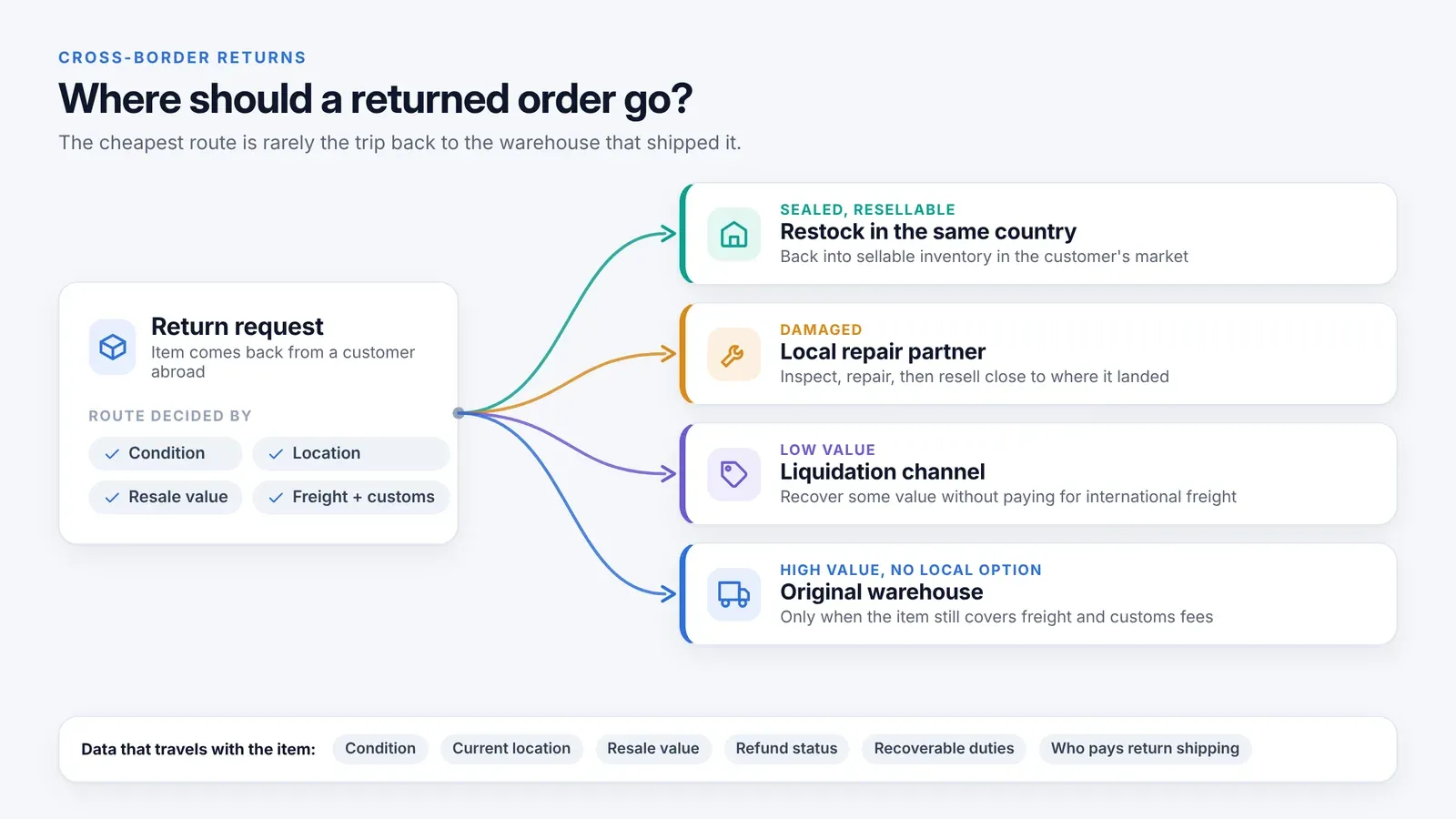
Good reverse logistics connects the return request with product condition, location, resale value, and refund rules. A sealed product can move back into sellable stock in the same country. A damaged item may need a different path. The system also needs to record whether duties can be recovered and which party pays the return shipping cost.
A software development company in Latin America working on this flow has to treat refunds as part of the original payment record. The customer may have paid in local currency while the retailer settles funds in another currency. If the refund happens weeks later, exchange rates may have moved. Clear rules are needed for refund amounts, payment fees, partial returns, and split orders so the customer receives the expected amount and finance teams can match the transaction.
Warehouse Routing Controls Delivery Promises
The warehouse that holds the product can decide whether a delivery promise stays on track or falls apart. If a shopper sees “Arrives Friday,” the system needs to have already checked stock location, warehouse handling time, carrier coverage, and possible border delays. Picking the nearest warehouse by distance can send the order down the wrong road if another location offers a cleaner customs path or faster carrier service.
The order engine should make a small set of connected decisions before it confirms the promise:
- Choose eligible stock. Check which warehouse has sellable units that can legally ship to the destination market.
- Compare total delivery cost. Include picking, shipping, duties, expected customs handling, and any local carrier fees.
- Protect the delivery date. Use realistic packing and transit times rather than a simple distance estimate.
- Limit split shipments. Sending one order from several locations can raise freight costs, customs work, and return complexity.
- Reserve inventory quickly. Once the order is placed, the selected stock needs to stop appearing as available to another shopper.
This is where software development in Latin America becomes closely tied to logistics design. The code needs current stock data and carrier rules, while operations teams need clear ways to change priorities by market. A retailer may prefer local stock for faster delivery, then allow regional stock when the local warehouse runs low. That logic should also shape the delivery experience shown before payment, since a promise built on incomplete routing data can create support cases later.
Payments Must Follow the Same Market Rules
Payments add another layer because customer preference, settlement currency, fraud checks, and refund paths vary by country. A storefront selling across several Latin American markets may need cards, bank transfers, digital wallets, or installment options in different combinations. Local payment methods can also have different confirmation times, which affects when the warehouse should release an order.
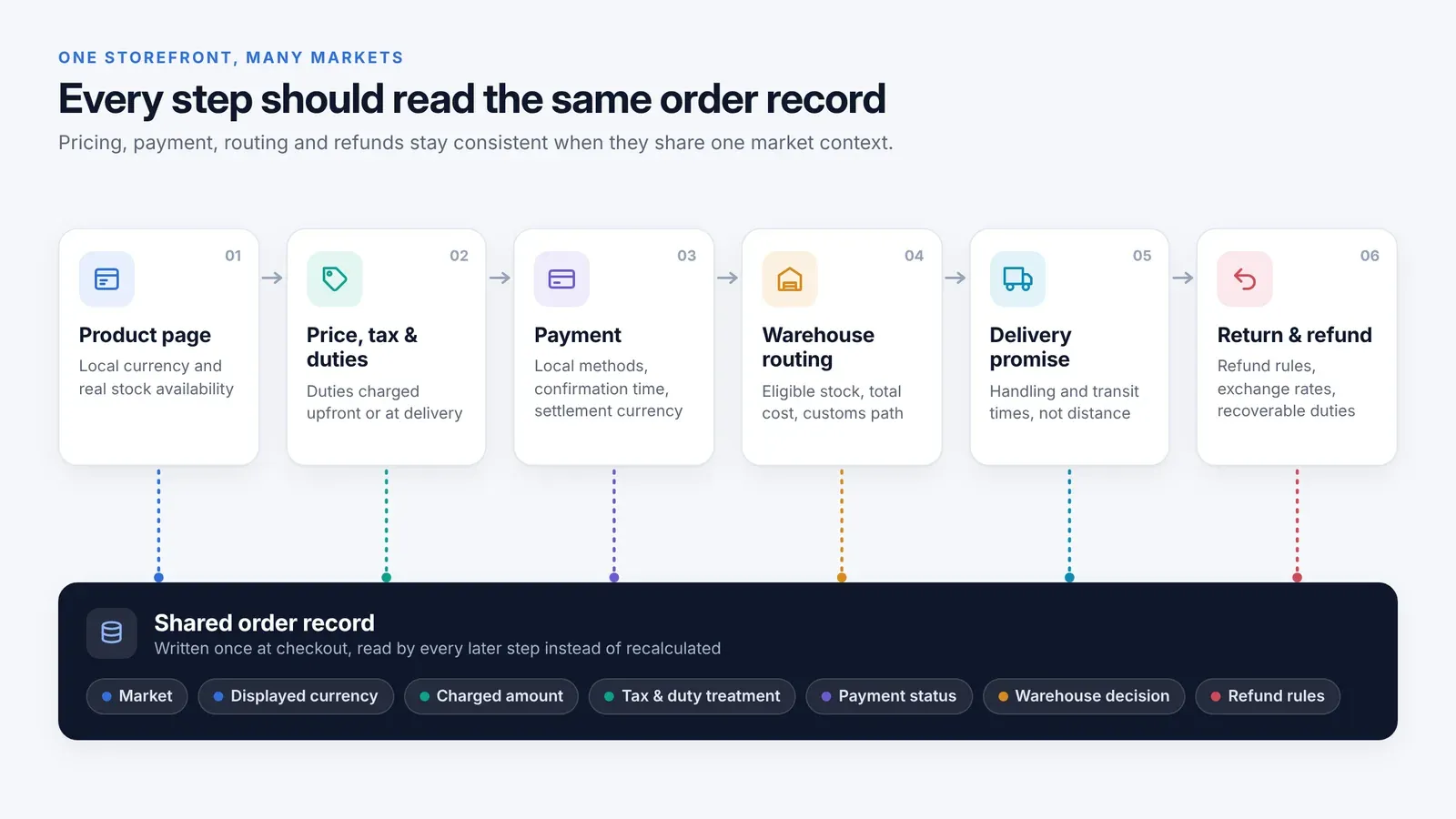
The payment record should carry the same market data used for pricing and routing. That includes the displayed currency, charged amount, tax and duty treatment, payment status, and warehouse decision. Therefore, a later refund or order change can refer back to one consistent record instead of rebuilding the calculation from separate systems.
One Storefront Needs Market-Level Rules
Cross-border eCommerce in Latin America works through connected local decisions. Pricing depends on currency, duties, taxes, and promotions. Returns depend on refund rules and the best local destination for the item. Warehouse routing affects freight cost, customs exposure, and the delivery date shown at checkout. Payments influence when inventory can move and how refunds are calculated. The keys are shared order data, clear ownership of each calculation, and software that passes the same market context from product page to payment, fulfillment, delivery, and return.