The Second Life of Educational Content on Social Media
Spybroski Team

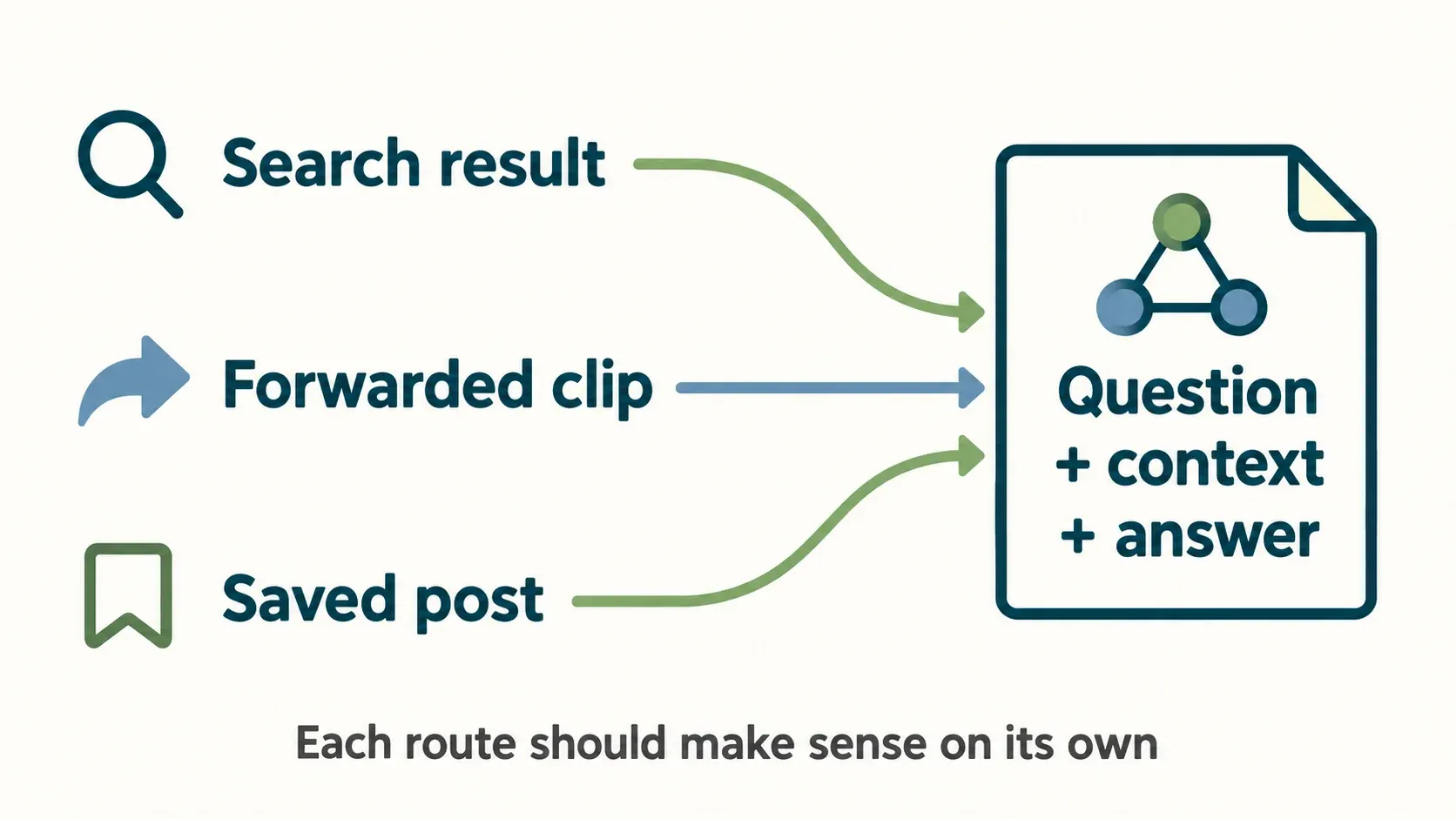
A short tutorial can outlive the circumstances that made it clear. Someone finds it through search, a colleague forwards the clip without its caption, or a saved post resurfaces after the software on screen has changed. The explanation is still circulating. Its original context may be gone.
For people making educational content on social media, publication is therefore one stage of the work. An answer also needs to remain understandable when it reaches a stranger, useful when someone tries it, and correct when a later viewer comes back. Those responsibilities can get lost in a calendar organized around the next upload.
Consider a hypothetical video showing how to export a document. The recording follows the right steps on a desktop computer. A phone user cannot find the same controls. Another person wants an editable file, while the demonstration produces a PDF. Neither viewer necessarily needs a new topic. They need the original explanation to state what it covers.
This is a practical editorial problem for independent teachers, software educators and small marketing teams. A post may be accurate within a narrow situation and still leave people stranded because that situation is never named. Giving the answer enough context can be a better use of production time than making another variation of the same hook.
An answer has to travel with its context
A follower who watched yesterday's lesson brings information that a search visitor does not have. They may know the course level, the device being demonstrated or the question that started the series. The new visitor has only what appears in front of them. A title such as “Part 4” asks that person to reconstruct the missing introduction before deciding whether the post can help.
Naming the question gives them a starting point. In the document example, “Export a PDF from the desktop app” tells the viewer more than “The export trick you need.” It also makes a promise the demonstration can actually keep. The wording does not need to account for every possible device and file format; it needs to identify the one being shown.
YouTube's search guidance supports that attention to specificity. The company says search considers how well the title, description and video content match a query, alongside engagement for that search. It also says results are not simply a list of the most-viewed videos. This is a reason to describe the subject accurately, not evidence that a particular wording will earn a high ranking.
The distinction matters when a marketing brief starts with an attractive search phrase and then bends the explanation around it. A broad title can bring together people with incompatible needs. Someone searching for an editable document and someone searching for a print-ready copy may use similar words. A useful post helps them recognize the difference before they follow the wrong demonstration.
Creators now have a more explicit place to investigate those questions inside YouTube. Its help documentation describes an updated Studio experience rolling out gradually from July 2026, with a Trends tab for exploring searches and, where available, content gaps for Shorts. A gap can include a search without an exact match or with outdated or low-quality results. Availability varies by country, language and device, so every account will not necessarily show the same sections.
That makes Trends a source of questions to inspect.
It cannot tell a teacher whether a proposed explanation is correct, and a visible gap is not an instruction to publish on an unfamiliar subject. Before filming, the creator still needs to open the relevant results, understand the unresolved question and decide whether they can answer it well.
A search-led revision can be small. If people are looking for the mobile version of a process, the existing desktop tutorial may need a clearer label and a separate mobile explanation. Replacing the desktop footage without saying so would confuse returning viewers. Keeping the two versions identifiable gives both audiences a usable reference.
Language changes the context too. For an Uzbek-speaking audience such as the one served by Prep.uz, a Russian example needs an explanation the viewer can understand. A creator making content for that audience should make the explanation language apparent in the post itself. Requiring a stranger to inspect the account biography first creates an unnecessary detour.
The brand or institution can help establish who is speaking, but it cannot replace the explanation. An educational post that opens with several lines about the organization may still omit the learner's most immediate question: is this meant for someone at my level? A brief audience cue earns its space when it helps the viewer interpret what follows.
There is a limit to how much background a short post can carry. Adding every exception to a demonstration can make the main action harder to follow. The editorial choice is to include the conditions that would change the viewer's next step. Device, version, language and prerequisite knowledge are useful when they affect the answer; a long account history usually is not.
The same principle applies to a clip extracted from a longer recording. Watch the excerpt on its own before publishing it. If “this setting” refers to a control identified thirty seconds earlier, the excerpt has lost information it needs. Replacing the pronoun with the setting's name may solve the problem without another introductory speech.
Some context belongs in the video or image because it matters at the exact moment of action. Other detail can sit in the accompanying text. A creator should not assume the caption will travel with a forwarded recording or screenshot. The crucial condition needs to remain visible in the part people are likely to pass along.
A useful review is to remove the account page, surrounding posts and production notes from view. Read only what the stranger will receive. If the answer still depends on something outside that frame, decide whether to add the missing context or narrow the claim. The aim is an explanation that can stand on its own without becoming a whole course.
The conversation changes what needs explaining
After publication, questions can reveal where an explanation stopped short. “Where is that menu?” might mean the viewer missed a step. It might also mean they are using a different device, an older version or an account without the same access. Replying with the original instruction again will not resolve all of those cases. For the hypothetical export tutorial, a useful response begins by establishing which situation the person is in. A question about device or app version is more informative than assuming carelessness. The creator can then decide whether the post needs a clearer boundary, an additional demonstration or a factual correction.
A clarification explains something that was already true but insufficiently clear. A correction changes something the post got wrong. A follow-up addresses a new question that the original piece did not promise to answer. Calling every response a “part two” can conceal that distinction, especially when viewers need to know that an earlier instruction should no longer be followed.
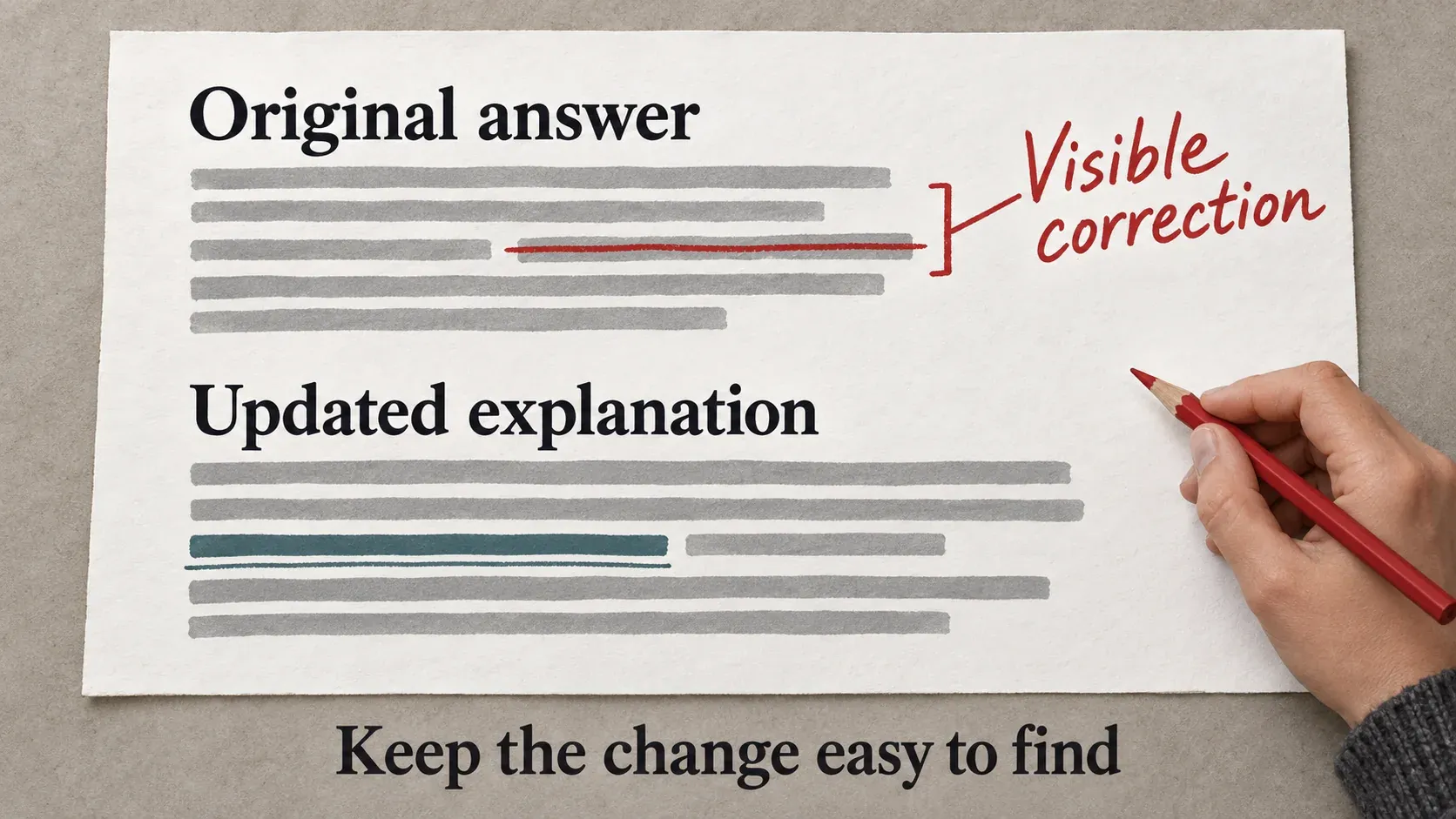
Suppose the export demonstration names the wrong file format. A new video about file types may be useful, but it does not by itself repair the original answer. The old post needs a visible correction through the editing or comment controls available on that platform. Where the error cannot be made clear enough, replacing or withdrawing the misleading post may be the more responsible choice.
A correction should identify the change directly. “Updated export instructions” is less useful than a short statement that the original demonstration produces a PDF rather than an editable document. A date can help distinguish the correction from the first version. The point is to let someone who saw the earlier answer understand what changed without investigating the whole account.
The route back matters as much as the new upload.
A correction posted days later may reach a different audience from the original. Wherever the platform supports it, connect the older explanation to the relevant update and make the relationship visible from both sides. Do not assume the feed will deliver the new piece to everyone who watched the first one.
A caption correction still cannot repair a recording that has already been forwarded without it. If the error is inside the footage, put the corrected condition inside the replacement too. Keep the opening image or wording recognizable enough for someone to connect the two versions. Then inspect any related posts that reuse the same demonstration. Otherwise, the main tutorial may be fixed while an extracted clip continues to circulate with the old instruction.
YouTube provides one concrete mechanism for this connection. Creators with advanced feature access can add a related video to a Short after uploading it. The selected video must come from their channel and be public or unlisted; viewers see a clickable link below the channel handle. That can give a short explanation a route to a fuller demonstration, provided the chosen video actually resolves the question.
The linked video's title and spoken invitation should describe the destination honestly. If the original post is missing a necessary step, sending people to a general channel trailer does not fill the gap. A useful follow-up continues the explanation at the point where the viewer became stuck. It should not require an unrelated sales presentation before supplying the answer.
Public questions also need judgment. A heavily liked comment may be a joke, a disagreement about an edge case or a request from a small group with unusually advanced knowledge. Its visibility does not establish that it represents everyone watching. Read the wording and the replies before letting the comment determine the next lesson.
A quiet question can expose a more basic problem. In a spreadsheet demonstration, for example, someone may understand the formula but not know which cells belong in its range. Repeating the formula faster would leave that prerequisite untouched. A follow-up that identifies the range gives the next viewer a way into the explanation.
Patterns become easier to examine when an editor keeps a modest record of recurring questions alongside the relevant post. The record can capture the problem in ordinary language without copying usernames or personal details. Its purpose is to notice repeated confusion and track whether a revision addressed it, not to turn every commenter into a marketing profile.
Questions from private messages deserve particular care. A learner asking for help has not necessarily agreed to become the subject of a public post. The creator can explain a general issue with a fresh example rather than reproducing the person's message. If a specific experience is essential, permission and accurate context should come before the content schedule.
A response also needs something new to contribute. Meta's March 2026 guidance on Facebook originality distinguishes substantive additions, such as fresh information or analysis, from minor changes to another creator's material. It says low-value alterations, including adding borders or changing playback speed, can be treated as unoriginal and deprioritized. That is Facebook-specific guidance, not a rule that determines performance everywhere.
For an educator, the more useful question is what the new piece lets a viewer understand that the old one did not. A follow-up might show the missing menu, explain the assumption behind a calculation or correct an example. New packaging alone cannot answer an unresolved question.
Keeping that distinction visible makes the conversation part of the editorial process. It also gives a small team a defensible reason to spend time revising an existing post. The work may produce no new topic for the calendar, yet it can leave the published explanation clearer than it was yesterday.
Make the return visit worthwhile
Returning to educational content often involves a practical need: the viewer wants the instruction again, has reached the next stage or is checking whether the answer still applies. The post should help them resume that task. Replaying a long introduction before every demonstration makes the return journey harder than it needs to be.
Consistent topic names can help across a series. If the first post calls a feature “export,” a later update should not refer to it only as “this hidden shortcut.” The subject needs to remain recognizable even when the creative treatment changes. A creator can vary the opening while preserving the terms people will use to find the answer again.
Dates and version information become useful when the explanation depends on them. A tutorial for a changing interface should make clear which interface it demonstrates. When a later update moves the control, the earlier post may still help people on the older version. A visible note can explain that boundary without pretending the two instructions are interchangeable.
This gives older posts a place in editorial planning. Before producing another installment, look at the explanations that still attract questions or require regular maintenance. A modest revision to a frequently encountered answer may serve readers better than a new post on an unrelated trend. That is an editorial judgment to test against the actual material, not a claim that updates always outperform new content.
YouTube's returning-viewer metric concerns the channel. It counts people who previously watched and returned during the selected period. They may come back for a different subject. The number does not show that they replayed a lesson, completed a task or understood an explanation. It is a clue about audience behavior, not a test result.
A saved post is similarly evidence of a saving action. It does not tell the creator whether the person later opened it while doing the task. A comment describing a successful attempt offers more context, but one account of success still does not represent every viewer. These observations are useful when their limits stay attached to them.
For language education, the value of another encounter has a research basis, though the social-media application requires restraint. A meta-analysis by Su Kyung Kim and Stuart Webb examined 48 experiments on spaced second-language practice. Its findings support spacing practice across time. They do not establish an ideal social posting schedule or show that repeatedly watching a feed video produces the same result as the learning activities studied.
A creator can use that distinction to design a more purposeful return. A later post might ask the audience to attempt a new example before seeing an explanation, with the original lesson available for reference. Whether people can answer that example is a different question from whether they recognize the earlier video. The activity needs its own clear instructions and an answer someone can check. For a software tutorial, the return might involve doing the same task on a different file. For a language explanation, it might involve deciding whether the original pattern fits a different sentence. These are possible editorial choices, not reported results from a campaign. They give the next post a reason to exist beyond reminding the audience that the account is active.
The closing invitation can stay close to that purpose. Ask which step remains unclear when the answer would help improve the explanation. Point to a follow-up when it supplies missing context. A request to comment a particular word merely to inflate activity adds little to a tutorial whose real difficulty is still unresolved.
For a small marketing team, maintenance can fit in a simple record. Beside each tutorial, note the claim likely to change, who will check it and where a correction would appear. A software version is one such trigger. A repeated question about the same missing control is another. Record the date and location of a correction once it is made, including any shorter clips that repeat the instruction. That gives the next editor something to inspect when the original creator is away.
The result is visible in an ordinary moment: a viewer opens the old export tutorial, sees the dated note about the file format and follows it to the corrected demonstration.
The answer they needed is there, and the change is easy to find.