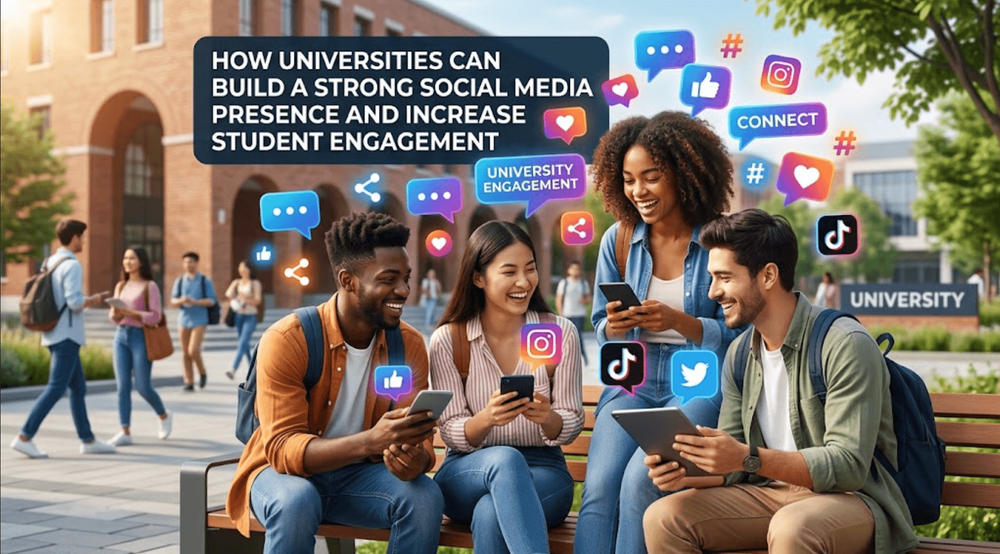
How Universities Can Build a Strong Social Media Presence and Increase Student Engagement

Spybroski Team
Social media has changed how students discover universities, explore campus life, and connect with educational institutions. Before visiting a campus or submitting an application, many prospective students browse Instagram profiles, watch TikTok videos, and look through student experiences to understand what attending a particular university might feel like.
For universities, this creates an opportunity to reach students in spaces they already use. However, simply having accounts on popular platforms is not enough. Institutions need content that encourages conversations, answers questions, and gives students a reason to stay connected.
A strong social media presence requires more than attractive photos and frequent updates. Universities need to understand their audiences, choose suitable platforms, and create content that students find useful and relatable.
Here are practical ways universities can improve their social media presence and build stronger relationships with current and prospective students.
1. Understand What Students Want to See on Social Media

Before creating a social media strategy, universities should understand what their audiences expect from them.
Prospective students often look for information about academic programs, admissions, scholarships, campus facilities, and student experiences. Current students may be more interested in campus events, student organizations, career opportunities, and university announcements.
Although these audiences follow the same institution, their interests can be different.
Universities can learn about these preferences by reviewing comments, analyzing frequently asked questions, and monitoring which posts receive the most meaningful interactions.
For example, a university might notice that videos featuring student experiences generate more comments than traditional promotional posts. This suggests that students want to hear directly from people who already attend the institution.
Surveys, Instagram polls, and question stickers can also help universities collect feedback about the content students want to see.
Rather than assuming what audiences find interesting, universities should use these insights to guide their content decisions.
2. Choose Social Media Platforms That Match Student Behavior
Universities do not need to maintain an equally active presence on every social media platform. Instead, they should focus on channels that help them reach their intended audiences.
Each platform offers different opportunities for communication and engagement.
Instagram for Campus Life and Visual Storytelling
Instagram is particularly useful for showing the university experience through photos, Reels, Stories, and interactive content.
Universities can use Instagram to share:
- Campus tours and student activities
- Behind-the-scenes moments from university events
- Student achievements and success stories
- Scholarship and admissions reminders
- Interactive polls and question-and-answer sessions
Instagram Stories can be especially helpful for sharing timely updates and encouraging quick interactions.
For example, a university could publish a series of Stories showing a typical day in the life of a first-year student, followed by a question sticker inviting prospective applicants to ask about campus life.
TikTok for Short Videos and Student Experiences
TikTok gives universities an opportunity to communicate through short, engaging videos.
Instead of relying entirely on polished promotional content, universities can experiment with student-led videos, campus challenges, educational tips, and informal interviews.
A short video showing what students wish they had known before their first semester could attract attention from prospective applicants.
Universities can also create videos answering common admissions questions or explaining what students can expect from different academic programs.
The content should feel natural to the platform while remaining accurate and appropriate for the institution.
LinkedIn for Academic and Professional Achievements
LinkedIn serves a different purpose. It is useful for highlighting academic research, graduate achievements, faculty expertise, internships, and professional partnerships.
Universities can use LinkedIn to connect with alumni, employers, postgraduate applicants, and professionals interested in continuing education.
Sharing graduate career stories and research projects can also demonstrate how academic programs connect with professional opportunities.
The best platform strategy depends on the institution's audience and goals, rather than the popularity of a particular network.
3. Create Authentic Content That Reflects Student Life
One of the most effective ways to improve student engagement is to show what university life actually looks like.
Prospective students want to understand the environment they may become part of. While professional campus photography has its place, everyday student experiences can offer a more personal perspective.
Universities can feature students discussing their academic experiences, favorite campus locations, extracurricular activities, and challenges they have overcome.
For example, a student studying engineering could share a short video about working on a group project, using laboratory equipment, or preparing for an important presentation.
A business student might explain how an internship helped them apply classroom knowledge in a professional setting.
These stories give prospective applicants a clearer picture of the academic experience while helping current students feel represented.
Student-generated content can also encourage participation. Universities might invite students to submit photos, create short videos, or share personal experiences using an official campus hashtag.
However, institutions should always obtain permission before reposting student content and provide clear guidelines for submissions.
Authenticity does not mean publishing everything without review. It means allowing students to share genuine experiences without turning every post into a promotional message.
4. Build a Consistent Content Calendar
Consistency helps universities maintain an active social media presence and gives audiences regular opportunities to engage.
However, posting frequently without a clear purpose can lead to repetitive content and lower-quality interactions.
A content calendar helps marketing teams organize topics, coordinate campaigns, and maintain a balance between promotional and community-focused posts.
For example, a university could follow a weekly content structure:
- Monday: Share a student success story or academic achievement.
- Tuesday: Publish a short campus tour or student experience video.
- Wednesday: Answer a frequently asked admissions question.
- Thursday: Highlight a student organization, faculty member, or campus event.
- Friday: Post an interactive poll, quiz, or weekend activity recommendation.
This is only a starting point. Universities should adjust their schedules based on available resources and audience engagement data.
Planning content in advance also helps teams coordinate important periods, such as application deadlines, orientation weeks, graduation ceremonies, and scholarship announcements.
Social media scheduling tools can make the process easier by allowing teams to prepare posts, manage multiple accounts, and maintain a consistent publishing schedule.
At the same time, universities should leave room for spontaneous content, especially when interesting campus activities or student achievements occur.
5. Encourage Conversations Instead of Only Publishing Announcements
Social media engagement depends on interaction.
Universities that use their accounts only to publish announcements may struggle to create meaningful relationships with followers.
Students should feel comfortable asking questions, sharing opinions, and participating in discussions.
Interactive content can help create these opportunities.
For example, universities can organize Instagram question-and-answer sessions with admissions officers, faculty members, or current students.
A prospective student considering a computer science degree might want to know about class sizes, available facilities, internship opportunities, or the application process.
Answering these questions publicly can help other students who have similar concerns.
Polls and quizzes can also encourage participation. A university might ask followers to vote for their favorite campus study location or share which student activities they would like to see featured.
Universities should also respond to comments and direct messages whenever possible.
A thoughtful response to a student's question can demonstrate that the institution values communication and is willing to provide support.
Not every interaction needs to be formal. Friendly, clear, and helpful communication often works better than overly promotional language.
6. Work With Student Ambassadors and Campus Creators
Students can be effective representatives of their universities because they understand campus life from personal experience.
Student ambassador programs allow institutions to involve current students in social media content creation.
These ambassadors might share campus tours, explain their academic routines, answer questions, or discuss their experiences with university services.
For example, a university could invite several students from different academic programs to create a series of short videos titled "A Day in My Major."
Each student could show a typical academic day, including lectures, practical activities, study sessions, and campus events.
This approach helps prospective applicants understand how experiences differ across programs.
Universities can also collaborate with students who already create content on Instagram, TikTok, or YouTube.
These collaborations do not necessarily require students with large follower counts. A student with a smaller but engaged audience may be well suited to sharing information with a particular community.
The important consideration is whether the creator can communicate clearly and represent their experience accurately.
Universities should establish content guidelines, clarify expectations, and disclose paid collaborations when applicable.
Students should also have enough creative freedom to communicate in their own voices.
7. Connect Social Media Engagement With Student Recruitment
Social media can help universities attract attention, but institutions also need to consider what happens after someone interacts with their content.
A prospective student might discover a university through a TikTok video, visit its Instagram profile, and eventually explore its website.
If the student wants more information about an academic program, the university should make the next step easy.
This is where social media becomes part of a broader digital marketing strategy.
Effective higher education marketing connects social media activity with other digital channels, including university websites, search engines, email communication, and admissions resources. This helps institutions guide prospective students from their first interaction toward finding the information they need to make an informed decision.
For example, a university publishing a video about its nursing program could direct interested viewers to a dedicated program page containing admission requirements, course details, tuition information, and application instructions.
Similarly, an Instagram post promoting an open day could link to an event registration page.
The destination should match the content that attracted the student's attention.
Sending every visitor to a general homepage may create unnecessary steps, especially when someone is looking for specific information.
Universities can also use campaign tracking links to understand which social media activities generate website visits, event registrations, or admissions inquiries.
This helps marketing teams evaluate whether their content supports institutional goals beyond increasing follower counts.
8. Use Social Media Analytics to Improve Content Performance
Publishing content is only one part of a successful social media strategy. Universities also need to understand how audiences respond.
Most major social media platforms provide analytics that help account managers review content performance.
Useful metrics include:
- Reach: The number of unique accounts that see a post.
- Engagement rate: The proportion of viewers or followers interacting with content, depending on the calculation used.
- Shares and saves: Indicators that people find content useful or worth revisiting.
- Video watch time: How long viewers spend watching video content.
- Profile visits: The number of people exploring an account after encountering content.
- Website clicks: Traffic generated through links in social media profiles, posts, or campaigns.
Universities should evaluate these metrics according to the purpose of each post.
For example, a campus tour video may be designed to increase awareness, while an admissions announcement may be intended to generate website visits.
Comparing these posts using only likes would not provide a complete picture of their performance.
Marketing teams should review their results regularly and identify patterns.
If student interviews consistently generate more meaningful engagement than generic campus announcements, the university could publish more student-focused