Custom Software Development for Companies With Non-Standard Business Processes
Spybroski Team
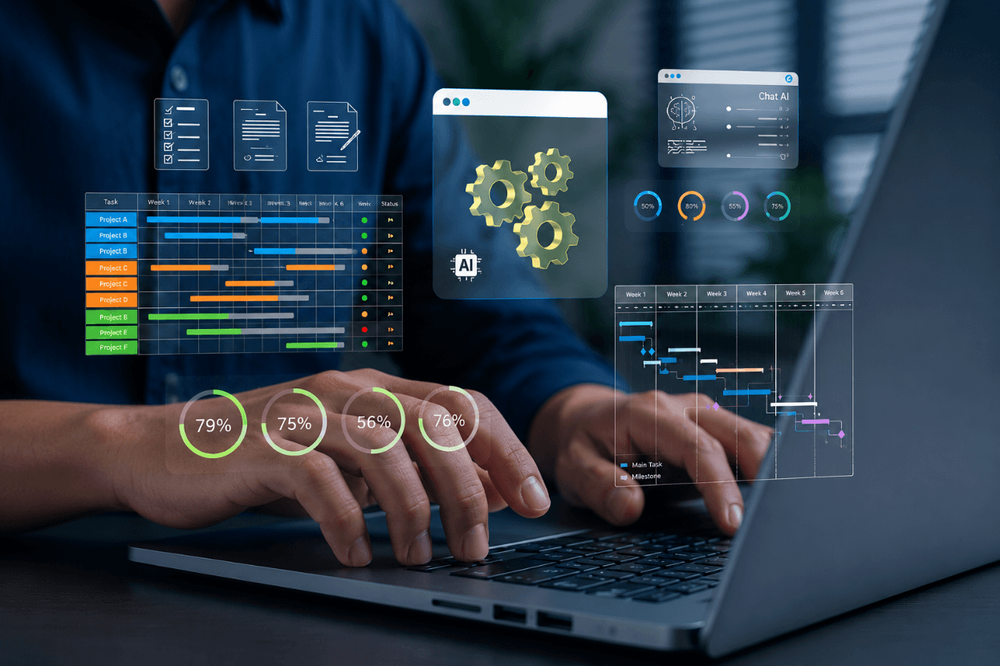
Every business likes to believe its operations are unique. But for companies with genuinely non-standard workflows, complex multi-party approvals, or proprietary service models, that uniqueness creates a very real technology problem. Off the shelf software forces conformity. Custom software development turns operational complexity into a competitive advantage. This guide walks founders and tech leaders through the decision, the design, and the vendor selection process for building bespoke software that actually fits the way you work, capturing your unique business workflows.
Why Non-Standard Business Processes Rarely Fit Off-The-Shelf Software
Companies with atypical workflows, layered approval chains, or proprietary pricing rules quickly hit limits with generic SaaS platforms. These tools are built for the average case, and if your business processes don't follow the average path, you'll spend more time working around the tool than working inside it.
Custom software development is valuable when generic software cannot support operational processes efficiently. Rather than bending your business model to match a vendor's template, custom software encodes your unique workflows as durable, scalable digital assets. It becomes your competitive edge.
This article will guide you through when to choose software development with a bespoke approach and how to select the right custom software development company. As the team at SoftDoes puts it: "We build systems around how your business actually operates, not how a SaaS vendor thinks it should." The rest of this guide covers every step, from recognizing the signals to building the business case.
Signals That Your Company Needs a Custom Software Solution
Not every company needs bespoke software. But certain symptoms, visible to operations and technology leaders alike, make the case clear. Here are the signals to watch for when considering custom business software:
- Revenue-critical steps like quotes, claims, or billing are tracked in personal spreadsheets
- A healthcare provider cannot reflect new payer contracts without manually overriding every bill
- A manufacturer's quoting rules differ by region, product variant, and volume, and cannot be modeled in standard ERP systems
- New staff take months to onboard because process knowledge lives only in people's heads
- Past attempts to customize SaaS through plugins have failed or become unmaintainable
Once three or more of these signals appear persistently, the incremental cost of workarounds likely exceeds the investment in custom software development services. Leadership should evaluate custom development as a strategic option, not a last resort. For further insights on technology trends impacting businesses today, consider exploring analysis from Wired, which offers comprehensive coverage on digital transformation and innovation.
How Custom Software Encodes Your Unique Business Processes
Think of custom software as a digital representation of your actual operating model, not a generic template you have to squeeze your operations into. The software development process includes discovery, design, and deployment stages, each one focused on capturing how your business truly works.
Discovery workshops bring together stakeholders across operations, compliance, finance, and frontline roles. Techniques like event storming map current workflows, decision points, exceptions, and data dependencies. The goal is to make implicit knowledge explicit.
For example, converting a multi-stage energy trading approval process into configurable workflows with role based access and automated notifications. Each approval step, commercial risk, credit risk, environmental sign off, becomes a defined node in the workflow process with clear rules for escalation, override, and audit logging.
Domain specific validations, pricing engines, and scheduling logic can be turned into reusable services within the bespoke software. A pricing engine, for instance, can support variable rates per region, customer, and service type, enabling workflow automation that no off the shelf tool could replicate.
Non-standard processes will evolve, and custom software should utilize a modular architecture, allowing changes without rewriting the core application.
Where it makes sense, artificial intelligence can be layered in to support exception handling, forecasting, and recommendations, without replacing human oversight. Staying informed about technology innovation can also help businesses explore emerging AI capabilities and improve their custom software strategies. More on that next.
Using AI To Support Non-Standard Processes Without Losing Control
AI should complement your unique processes, not replace them. This is especially true in regulated or high risk environments where explainability and auditability are mandatory. Process automation can further enhance efficiency by reducing manual interventions and minimizing human error.
Practical AI use cases in custom software include:
- Anomaly detection: Flagging unusual orders, unapproved discount levels, or atypical refund patterns in real time
- Natural language processing: Searching across contracts, internal policies, or regulatory documents by meaning rather than keyword
- Intelligent routing: Directing support tickets or claims to the correct team based on custom classification rules, location, and severity
- Predictive analytics: Custom ML models that forecast demand, risk, or service delays based on your own historical data
AI can boost software engineer productivity by 25 to 65 percent during the development cycle itself. Generative AI can automate content creation and code generation. Agentic AI can make autonomous decisions in software applications where the risk tolerance allows it. But for high impact actions, human approvals and logging for audits remain essential. For more insights on how technology is transforming industries, the MIT Technology Review provides in-depth analysis and expert perspectives.
Designing Custom Software Around Complex Business Processes
Design in a custom software project is not only about screens and buttons. It encompasses workflow modeling, data architecture, compliance requirements, and the user experience that ties it all together.
The development process starts with detailed process maps drawn from interviews with operations leaders, frontline staff, and compliance officers. These maps capture the "happy path" as well as error paths, loops, and exceptions. The result is a set of "to be" process blueprints that remove redundant steps while preserving the essential business logic driving your margins and differentiation.
Edge cases matter. Standard software solutions ignore custom escalation paths, region specific tax rules, or multi-party approval chains. Custom software captures them explicitly.
Embedding testing for exceptional scenarios is crucial for software development. Professionals interested in AI-assisted coding and development workflows can also explore generative ai for software development If a deal requires environmental, legal, and credit sign off simultaneously, the software must handle parallel approvals, timeouts, and fallback paths.
Evaluating Technical Alignment and Modern Architecture
Architecture choices made today will shape agility and cost for the next five years. Custom software allows seamless integration with existing technology stacks, but only if the vendor's approach aligns with your existing systems.
Align with your existing tech landscape to enable seamless communication between new software and current tools. Custom applications can include required security controls and reporting that generic platforms lack.
Cloud services support scalability for growing businesses. Cloud computing enhances performance and cost efficiency for applications. Cloud based designs ensure software scalability from the start, and cloud services enable seamless integration with existing IT environments.
Modern custom software development solutions often combine microservices, event driven architectures, and managed cloud databases. These patterns support non-standard, evolving processes and allow your team to update business rules without expensive rewrites across the entire system.
Planning for Integration With Legacy Systems and External Platforms
Companies with non-standard processes almost always rely on a mix of legacy databases, industry platforms, and partner portals. A custom software application development effort that ignores this reality will fail.
Use patterns like event based integration and message queues to avoid brittle point to point connections. Custom software can integrate third party systems to streamline operations without creating fragile dependencies.
SoftDoes designs integrations so that business processes keep running even when one external service is slow or down, building resilience into every layer through queueing, retries, and fallback paths.