
Your Marketing Team Isn't Slow – They're Stuck in Approval Bottlenecks

Spybroski Team
Picture this: your marketing team just finished what they thought was the final draft of a campaign. Everyone's excited. The creative is sharp, the messaging hits, and the timing is perfect. Then it happens. The email sits in someone's inbox for three days. Legal needs "just one more look." Finance wants to rethink the budget allocation. An executive who hasn't been involved suddenly has opinions. Two weeks later, your perfectly timed campaign launches into a completely different market moment. Sound familiar?
Here's the truth: your marketing team isn't slow. They're stuck in approval bottlenecks that have nothing to do with their actual capabilities or work ethic. The real problem? External delays from legal departments, finance teams, executives, and other stakeholders who create endless loops of feedback and sign offs. And yet, marketing gets blamed for missing deadlines.
The Real Culprit Behind Marketing Bottlenecks
Marketing bottlenecks don't happen because your team lacks motivation or skill. They happen because of broken systems. When 92% of marketing teams cite approval delays as their top reason for missing deadlines, you're looking at a structural problem, not a people problem.
The numbers tell a brutal story. Marketing cycles run 240% slower than they should, and companies waste $0.25 of every marketing dollar on inefficiencies caused by these delays. That's not just frustrating, it's expensive.

Most approval bottlenecks share common patterns. There's the stakeholder who only reviews materials on Fridays. The legal team that takes a week to respond to simple questions. The VP who wasn't looped in early and now wants everything redone. The scattered feedback across Slack, email, Asana, and random spreadsheets that no one can track.
Then there's the handoff confusion. Who actually tests the email before it goes out? Who owns the final sign off on social copy? When responsibilities blur, campaigns stall. Teams spend more time chasing approvals than actually marketing.
Why Your Marketing Approval Process Is Breaking Down
The marketing approval process breaks because most organizations never actually defined one. Teams operate on assumptions and habits rather than clear workflows. Someone decides they need to review something, even if their input isn't necessary. Feedback trickles in over days instead of arriving in one consolidated round.
Email chains become approval nightmares. Version control disappears when ten people comment on five different drafts. This becomes even more critical in client-facing workflows like proposals, where using dedicated proposal software for accountants helps centralize feedback, maintain version control, and speed up approvals without confusion. By the time you compile everyone's thoughts, half the team has moved on to other projects and doesn't remember the context.
In regulated industries, the problem gets worse. Despite rules like the SEC Marketing Rule taking effect in 2022, 49% of firms still rely on manual marketing reviews. Manual means slow. Manual means mistakes slip through. Manual means your compliance team becomes an unintentional bottleneck because they're drowning in review requests, while automated approval systems eliminate these manual burdens.
Large organizations suffer more than startups. Hierarchical structures create layers of sign offs that made sense decades ago but cripple agility now. A startup might get three people in a room and ship a campaign in an afternoon. A corporate marketing team needs two weeks and eight approvals for the same work.
What Marketing Workflow Optimization Actually Looks Like
Marketing workflow optimization isn't about making your team work harder. It's about removing the friction that slows them down. And that starts with mapping your actual process, not the one you think you have.
Sit down with your team and diagram every step a campaign takes from concept to launch. Where does it pause? Who holds it up? How long does each stage actually take? You'll probably discover that creative work takes three days, but approvals take three weeks.
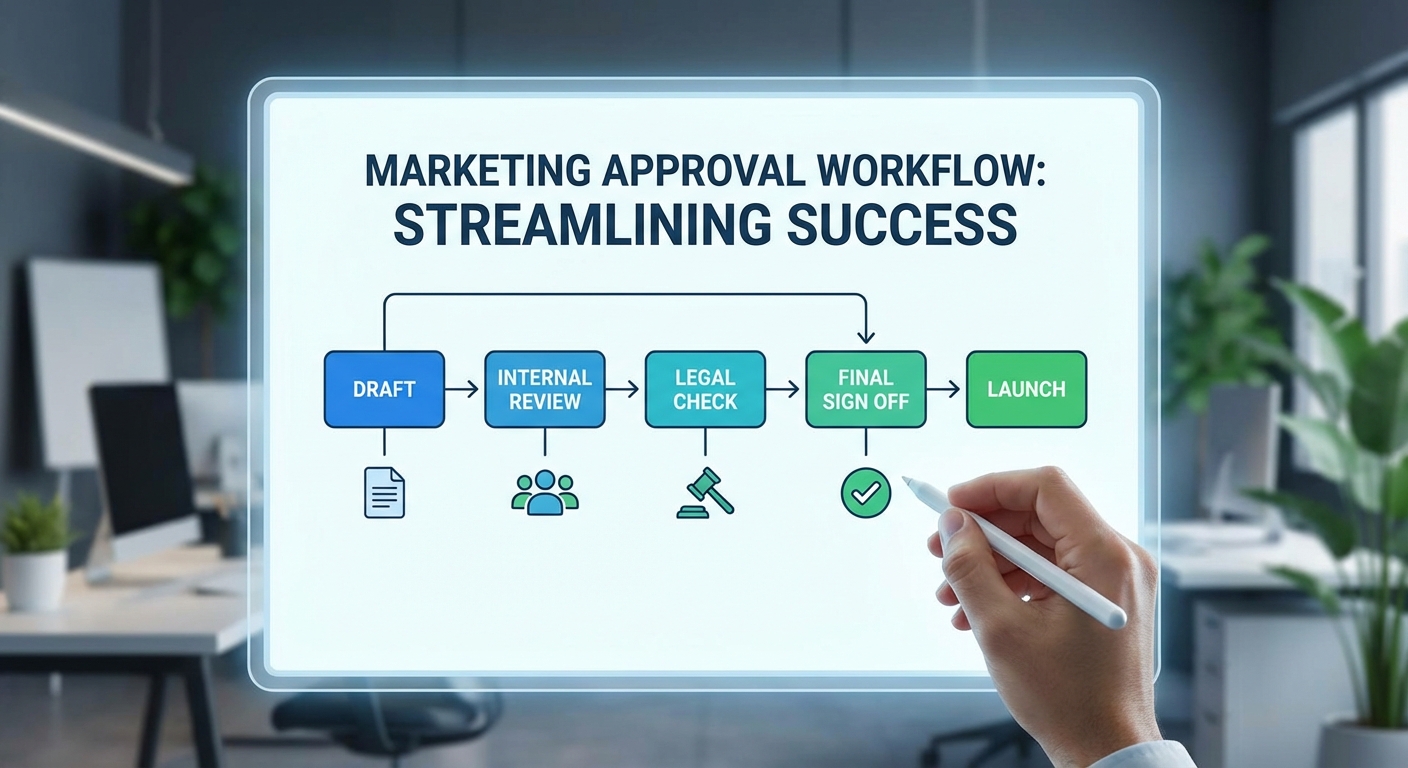
Once you see the bottlenecks, you can fix them. Here's what actually works:
Define clear approval stages. Every campaign should follow the same path: draft, internal review, brand review, legal check, final sign off. No mystery handoffs. No surprise reviewers appearing in round four.
Set service level agreements for approvals. Legal gets 48 hours to review. Finance has 24 hours for budget sign offs. Executives provide feedback within three business days or the campaign moves forward. SLAs sound rigid, but they create predictability.
Involve stakeholders early. The worst bottleneck is the executive who sees a campaign for the first time at the final stage and wants changes. Loop people in during concept phase with quick visual mockups. Early feedback is faster feedback.
Consolidate tools. Stop managing approvals across Slack, email, project management software, and shared drives. Pick one platform where all feedback, versions, and sign offs live. Real time visibility prevents the "I didn't know this needed my review" excuse.
Platforms like Mavenlink help centralize project workflows, making it easier to manage approvals and collaboration in one place. If Mavenlink doesn’t fully meet your needs, exploring Mavenlink alternatives can help you find a solution that better fits your team’s workflow and scalability requirements.
Assign clear ownership. One person owns each approval stage. When everyone is responsible, no one is responsible. If legal review stalls, there's one person your team contacts to unstick it.
How Marketing Team Management Can Prevent Bottlenecks
Marketing team management plays a huge role in preventing approval chaos. Managers need to advocate for their teams when external bottlenecks threaten deadlines. That means having tough conversations with other departments about their review timelines.
It also means educating stakeholders. Many approval delays happen because reviewers don't understand what they're approving or why it matters. When a finance director understands how a campaign drives revenue, they prioritize that budget sign off differently.
Good marketing team management also involves saying no. Not every stakeholder needs to review every asset. A junior analyst from a tangential department doesn't need to weigh in on your email subject lines. Limiting reviewers to essential voices speeds everything up.
Empower your team to make decisions within defined parameters. If brand guidelines are clear, designers shouldn't need approval for every color choice. If messaging frameworks exist, writers can create copy without three rounds of executive feedback. Trust reduces bottlenecks.
Why Marketing Productivity Depends on Killing Approval Loops
Marketing productivity craters when teams spend more time managing approvals than doing actual marketing work. Creative people burn out chasing sign offs instead of creating. Strategists waste hours explaining the same concept to five different reviewers who never talk to each other.
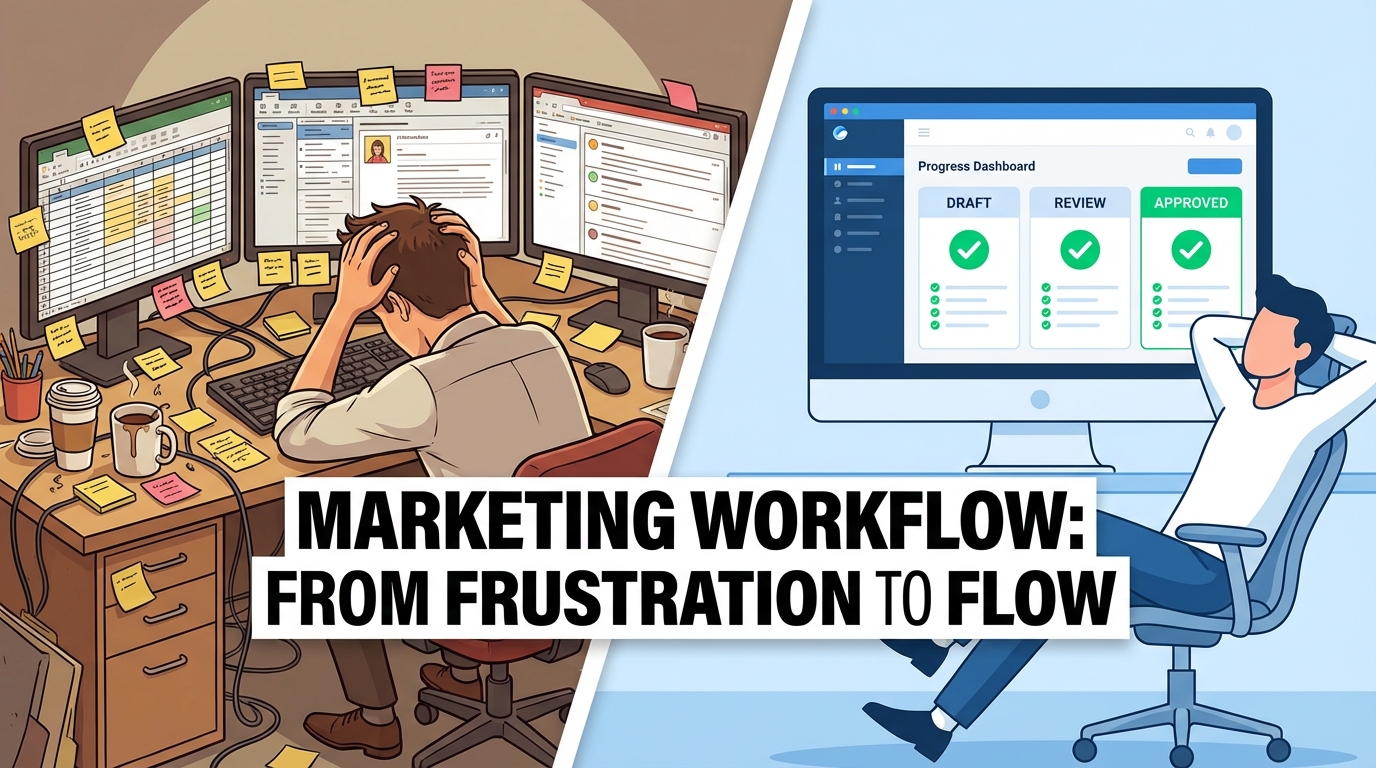
The opportunity cost is massive. While your team waits for legal to respond about one campaign, three market opportunities pass by. Competitors launch faster because they have cleaner processes. Your slower cycle time becomes a competitive disadvantage.
Some organizations are fixing this with agile marketing approaches. Instead of waterfall approvals where everything stalls until one person signs off, agile teams work in iterations. Ship a minimum viable campaign, gather data, improve it. Speed matters more than perfection in many contexts.
Automation helps too, especially for recurring approvals. If your monthly newsletter follows the same format and legal has approved the template, subsequent editions shouldn't need the same scrutiny. Smart automation tools can flag actual risks while letting routine work flow through, and teams that automate creative workflows end-to-end get that same predictability without waiting on legal every time.
The Path Forward: From Bottleneck to Breakthrough
Fixing approval bottlenecks isn't a one time project. It requires ongoing attention and adjustment. Start small. Pick your most delayed campaign type and map that process first. Implement changes. Measure improvement. Then expand to other workflows.
Track metrics that matter: time per approval stage, number of revision rounds, percentage of campaigns hitting deadlines. When you can show leadership that streamlined approvals cut cycle time by 40%, you get buy in for broader changes.
Remember that resistance will come from unexpected places. Some stakeholders like having approval power, even when they add no value. Some executives feel ignored if they're not reviewing everything. Managing those relationships requires diplomacy and data. Show them that faster processes lead to better results.
The organizations that figure this out gain real advantages. They respond to market shifts while competitors are stuck in review cycles. They launch more campaigns with the same team size. Their marketing people actually enjoy their jobs because they spend time creating instead of chasing approvals.
Your marketing team probably has the talent, creativity, and drive to do remarkable work. What they need is a system that doesn't fight them at every turn. Clear processes, defined roles, reasonable timelines, and the authority to execute within smart guardrails. That's not about working harder. It's about working in an environment designed for speed and clarity rather than bureaucratic inertia.
So next time someone says your marketing team is slow, look at the approval process first. Chances are, you'll find the real problem hiding in plain sight, buried under layers of unnecessary sign offs and unclear handoffs. Fix that, and you might be surprised how fast your "slow" team actually moves.