The Truth About AI Generated UGC Videos Right Now

Spybroski Team
You know what? Scrolling through your feed feels a bit different these days. You see a person talking about a new skincare routine or a finance app. They look real. They sound real. But something is a tiny bit off about their face. Welcome to the era of ai ugc videos. Brands are pumping these out. Let me explain what is happening here.
User generated content used to mean real people filming themselves in their messy bedrooms. It was raw and authentic. People trusted it. Now we have machines doing the heavy lifting. You type a script into a computer and a digital avatar reads it back to you. It looks like a front facing selfie video. It is kind of wild to watch. I remember seeing my first one and thinking it was a real influencer. I was wrong. It was a clever line of code.
Right now these video platforms have over a hundred million monthly active users. You can look at the latest numbers from Tagshop to see how massive this has become. The artificial video market is closing in on a billion dollars. That is a lot of digital faces flooding your feed.
What Is UGC Anyway
Before we talk about the robots we should look at the past. User generated content started as a very simple idea. Brands realized that slick television commercials do not work on social media. People hate ads. They swipe past them. But they love watching other regular people. So brands started paying regular people to make videos. This created a massive boom in the creator economy. Anyone with a smartphone could become a paid reviewer.
The goal was to look natural. The lighting was supposed to be a bit bad. The audio had background noise. These flaws signaled to the brain that the video was real. It did not feel like a polished corporate commercial. The viewer felt like they were getting advice from a friend. That is the true magic of ugc.
Why Brands Are Making The Switch
We should talk about why this massive shift is happening. Paying human creators takes time. You have to find them and negotiate rates. Then you wait weeks for them to film and edit the footage. Sometimes they miss the brief and you have to start over. It happens all the time.
With ai ugc you skip all that waiting. You get your video in minutes. Sure it lacks a true human soul. But brands care about speed and money above almost everything else. A recent social media report showed that ugc style posts convert ten times better than polished ads. Brands know this. But traditional videos cost money. According to the team at Cometly the cost of production dropped by ninety percent when companies switched to artificial intelligence. You skip the location scouting. You skip the lighting setup. You just type.
A subscription to a software platform costs way less than a monthly retainer for a roster of influencers. You can test ten different marketing hooks in one afternoon. A real human would need a full day of filming to do that.
There is also the control factor. Humans are unpredictable. A creator might get involved in a scandal tomorrow. That reflects badly on your brand if they are the face of your ads. Digital avatars do not get canceled. They do not say the wrong thing on Twitter. They read the script you give them. That level of safety appeals to big companies.
The Psychology Of Scrolling
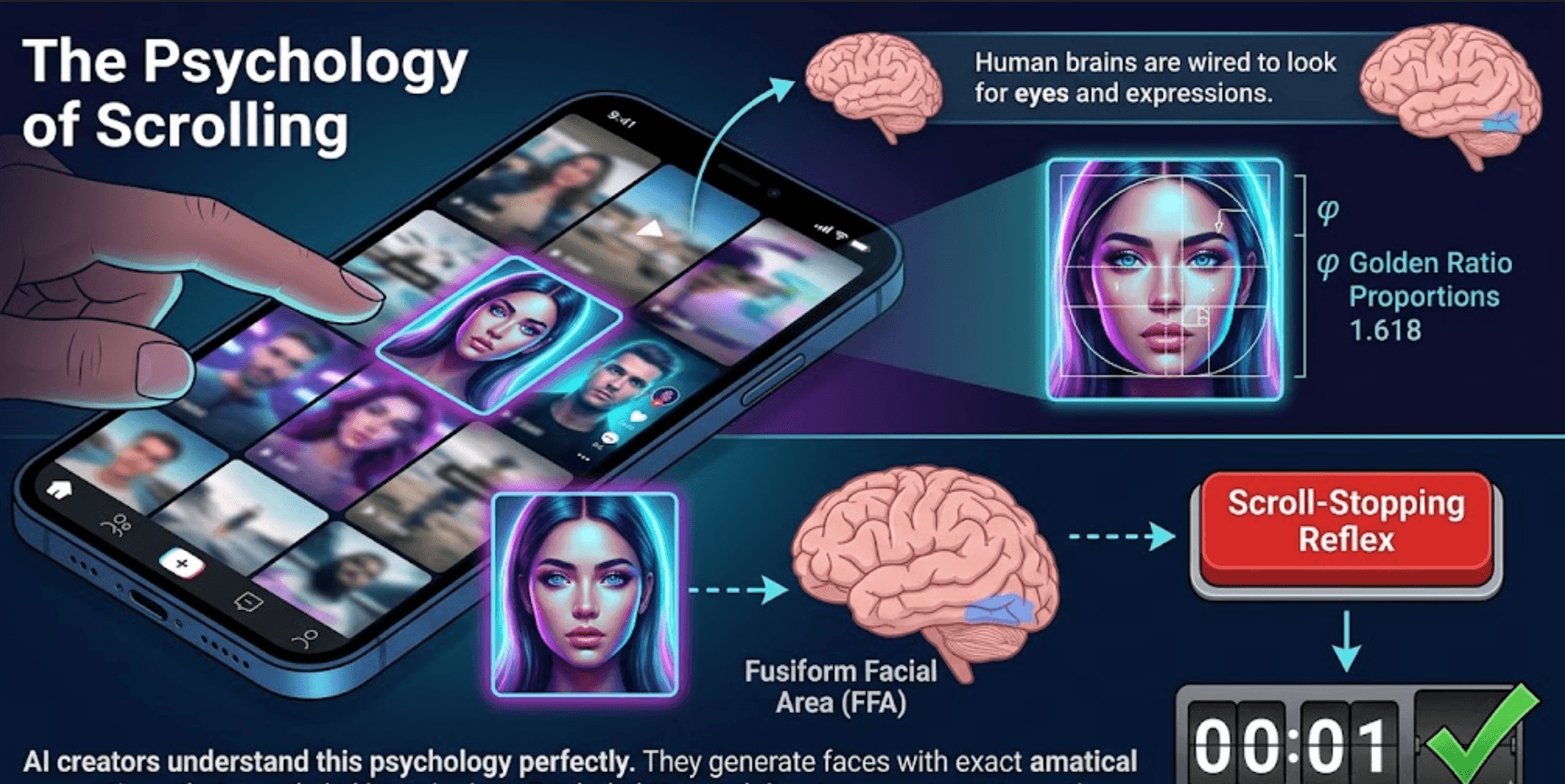
Let me ask you something. Why do you stop scrolling on a video. Usually it is a face. Human faces grab our attention better than anything else on a screen. Our brains are wired to look for eyes and expressions. This is basic biology. The social platforms know this. That is why face led videos perform the best.
AI creators understand this psychology. They generate faces that fit the exact mathematical proportions that people like to look at. They use bright lighting and direct eye contact. This triggers the scroll stopping reflex in your brain. You pause for a second. That second is all the algorithm needs to count a view.
A Look At The Best AI UGC Video Generators
People keep asking me about the best ai ugc video generators available. There are a few names you hear all the time in marketing circles. You have seen their work without even realizing it.
Arcads is making waves right now. They let you pick an actor from their library and type your script. The software does the rest. They focus on the short form style. The avatars hold phones and walk around and point at text on the screen. It feels native to the vertical video format. You type your text and wait a few minutes.
Then you have HeyGen. This tool started out stiff but they improved. They released their fifth generation avatar model and it is wild. The system maps your exact micro expressions. It captures how your face settles when you stop talking. You record one short video on your phone and the software builds a complete digital twin. You can then put that digital twin in different outfits and different locations without ever filming again. My friend uses this for a travel blog and nobody can tell the difference.
insMind is another option for brands that want to create UGC-style ads without moving between separate image, video, and editing tools. Rather than starting with an avatar alone, you can upload a product photo or brand visual and turn it into a short review, unboxing, testimonial, or lifestyle-demo video. That makes it especially useful for e-commerce teams that need to show the product early instead of relying only on a person talking to the camera.
One useful part is the variation workflow. From one product image, you can test different hooks, scripts, creator personas, tones, and calls to action, then compare which angle feels most native to the feed. It is a practical way to create more options for TikTok or Instagram testing before spending budget on a full creator shoot.
For brands expanding into new markets, insMind also supports multilingual UGC creation with voiceovers and lip-sync. And if you need more than avatar-led clips, its AI Video Generator combines image-to-video and text-to-video tools in one workflow. The final video should still be checked carefully, but it gives marketers a faster starting point for testing product stories and ad concepts.
Then there is Synthesia. They are the heavy hitter for corporate teams. If you need a massive amount of internal training videos they are the best option. They have over a hundred different languages and they focus on enterprise compliance. The avatars feel a bit more corporate than HeyGen but they are reliable. They even added emotional avatars that change expressions based on the context of your script. If your script shares bad news the digital actor looks concerned.
There are plenty of others popping up every single week. The technology moves fast. A tool that looks robotic today might look flawless next month.
The Language Superpower
We also need to talk about language. This is a hidden benefit that changes everything. Imagine you run a store in the United States. You want to sell your products in Spain and Japan and Germany. Hiring creators in all those countries is a massive headache. You have language barriers and time zones to deal with.
With a digital avatar you click one button. The exact same video is translated into forty different languages. The lip sync matches the new language. You can test international markets without leaving your desk. That kind of power was impossible a few years ago. Now it costs twenty bucks a month.
The Uncanny Valley Problem
Here is the thing. These tools use machine learning to map facial movements. They study hours of real human speech. Then they apply those patterns to a photo or a 3D model. The result is a video that mimics human expressions. Sometimes it looks flawless. Other times it falls into the uncanny valley.
The uncanny valley is that creepy feeling you get when something looks human but not quite. The teeth look a bit too sharp. The eyes do not blink enough. The skin has zero texture. You have probably seen these mistakes in your feed and kept scrolling.
Can ai replace ugc. That is the big question everyone is asking. True ugc builds trust because it is flawed. We relate to the messy hair and the bad lighting and the occasional stutter. Digital avatars are too perfect. They never stumble over their words. This perfection breaks the illusion. Viewers are smart. They catch on quick. Once a viewer knows it is a robot they stop watching.
How To Make Robots Look Real
So how do you fix this problem. You have to make the machine act human. This all comes down to how you write your script. Do not write a perfect corporate essay. Write the way you speak.
Add pauses to your script. Tell the avatar to look away for a second. Most platforms let you add these small actions with a click. Make them say um or uh in the middle of a sentence. These small flaws trick the human brain. It makes the video feel spontaneous. I guess that sounds a bit deceptive. But it is just marketing. You want the viewer to feel a connection to the message.
When you write these scripts try reading them out loud first. If you stumble over a sentence the robot will make it sound worse. Keep your sentences short. Break up long paragraphs. The pacing feels much more natural when the digital actor gets to take a fake breath between short thoughts. You can even add text on screen to keep the viewer distracted from the face. Text overlays are a great trick. They give the eye something else to look at just in case the lip sync gets weird.
If a smooth delivery pushes them away then you have to rough it up a bit. Use slang if it fits your brand. Ask rhetorical questions. Say things like you know what I mean. Real people talk like that. You should also pay attention to the background. Do not use a flat green screen. Put the avatar in a messy kitchen or a car. Cars are great for ugc style videos. People love filming themselves in their cars for some reason. If you put an avatar in a car seat it boosts the realism.
You should also use plenty of b roll footage. Do not just leave the avatar on screen for the entire sixty seconds. Show the face for the first three seconds to grab attention. Then cut away to a screen recording or a product shot while the robot voice keeps talking. Bring the face back at the very end for the call to action. This covers up a lot of the visual mistakes. It keeps the video moving fast.
When To Avoid Artificial Content
Not every brand should use this tech. We have to be honest about its limits. If you sell a physical product people want to see it in real hands. They want to see how the fabric moves or how the cream rubs into the skin. A machine cannot do that well yet. The hands always look weird.
Have you ever noticed how these systems struggle with hands. It is a known glitch. The fingers blend together or move in strange ways. If your product requires close up hand shots you need a real human. There is no way around it right now.
Food brands also struggle with this. You cannot fake a delicious bite of a burger with a digital avatar. It just looks silly. People need to see real enjoyment to feel hungry. But if you sell software or digital services ai ugc videos are perfect. You just need someone to explain the app on screen. A digital avatar can do that all day long without getting tired. They can point to a screen recording of your app and explain the features clearly.
The Impact On Real Creators
We need to talk about the people making content right now. Are influencers going to lose their jobs. Some people think so. I disagree. I think the job is changing.
Top tier creators are safe. People follow them for their unique personality and their specific life story. An avatar cannot replicate the drama of a real person. We watch vloggers because we care about their actual lives. But the faceless creators making quick ad reads might be in trouble. If your entire job is reading a script in front of a ring light a machine can do that cheaper. Brands will choose the cheaper option for those generic ads.
Some smart creators are leaning into the tech. They are licensing their own faces to these platforms. You could pay to use your favorite micro influencer avatar for your ad. That creates a whole new passive income stream for them. And a much cheaper option for you. It is a win for everybody involved.
How The Social Platforms Are Reacting
You cannot just trick the system forever. Social media platforms know what is happening. They are rolling out new rules for artificial content this year. They want users to know when something is not real.
Instagram unveiled an official AI Creator label for accounts. You can read the full breakdown over at MediaPost. If a creator uses machines to make their content they have to tag their entire account. The social network wants users to know what they are looking at.
TikTok is taking it a step further. They use a system called Content Credentials to spot fake media. Even if you try to hide the fact that you used a machine the platform will likely catch it. The folks at Storrito did a deep breakdown on this. If the system spots a fake face it slaps a warning label right on the video. This changes the game. If your ad has a big artificial label on it the watch time might drop. People might scroll right past it. This means your content has to be engaging. Even if they know it is fake they will watch if the story is good. The hook has to be stronger than ever. The pacing has to be perfect. You cannot rely on a pretty face alone. You need actual substance.
Mixing Humans And Machines
The smartest strategy is not picking one over the other. You should mix them together. Use these tools for your standard testing. Pump out fifty videos to see which script performs the best. Find the winning angle using the cheap artificial content.
Once you find the hook that gets clicks you hire a real person. Give them the winning script and tell them to put their own spin on it. Now you have the data backing up your creative choices and the authentic human connection delivering the final blow. This saves you so much money on the testing phase. You only pay real creators for the concepts you already know will work. That seems like a solid plan to me. It gives you the best of both worlds.
Wrapping Things Up
It all comes down to what you need for your business. If you need cheap and fast content then look into the best ai ugc video generators. Play around with them this weekend. Set up a free trial and see if they fit your brand voice. You might be surprised by how good they look.
But never forget the power of real human connection. A shaky video from a real passionate customer will always hold a special kind of power. It carries weight. It carries trust. Try mixing both approaches. Use the machines for speed and the humans for soul.
The tools will keep getting better. The mistakes will fade away. But the need for a good story will never change. Focus on what you are saying before you worry about who is saying it. That is how you win the attention game.