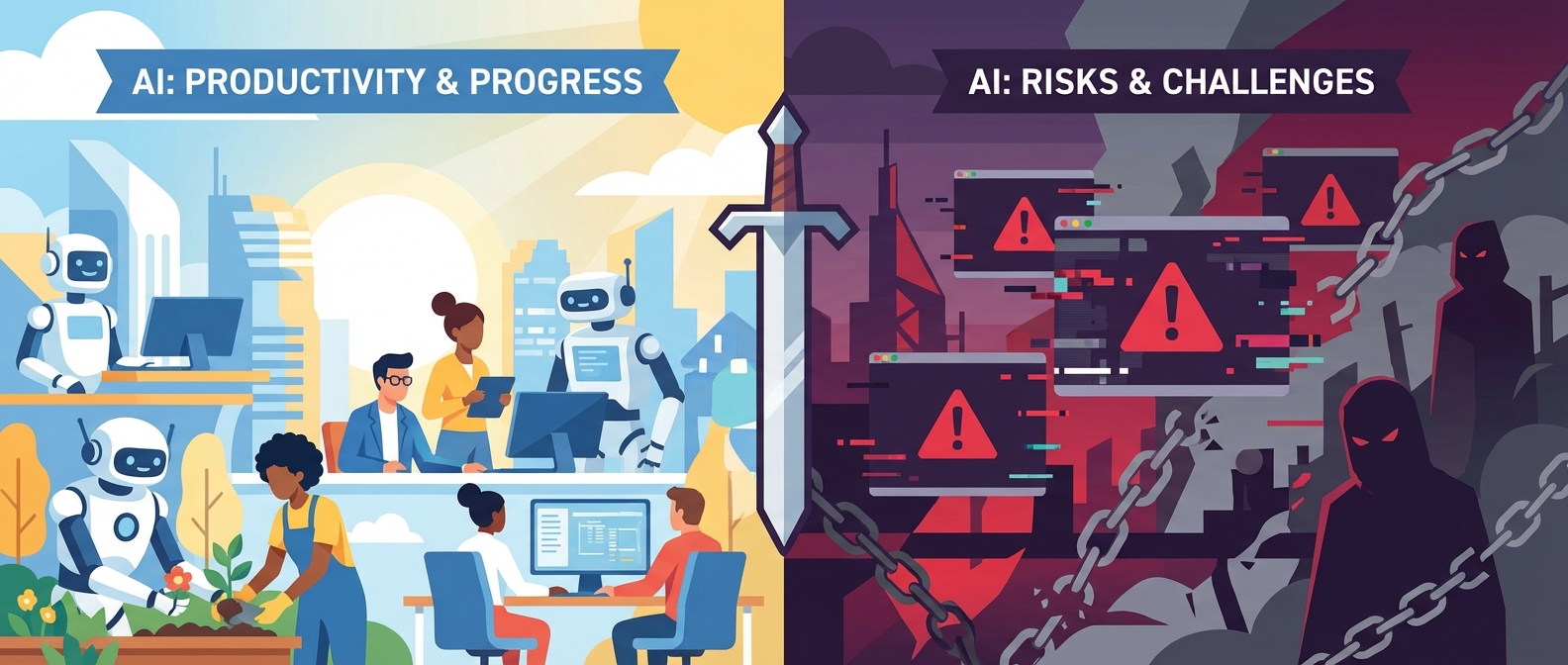
The Pros and Cons of AI: What's Good, Bad, and Downright Scary

Spybroski Team
The Pros and Cons of AI: What's Good, Bad, and Downright Scary
Meta Description: Explore the real pros and cons of AI, from boosting productivity and cutting costs to job loss, fraud, and privacy risks. A balanced look at the ai good and bad.
Artificial intelligence is everywhere. It schedules your meetings, recommends your next binge watch, and even writes marketing copy. But for every cool thing AI does, there's a flip side that makes people nervous. The ai good and bad debate isn't slowing down anytime soon. And honestly, it shouldn't. Because as AI gets smarter and more embedded in our daily lives, understanding both sides matters more than ever.
This post breaks down the real ai pros and ai cons so you can form your own opinion. No hype. no doom. just a clear look at where things stand.
The Good: Where AI Actually Delivers
Let's start with the positives, because there are plenty.
It Handles the Boring Stuff
Nobody loves filling out spreadsheets or sorting through thousands of customer emails. AI thrives on repetitive tasks, with generative AI development companies continuously improving how these systems process and structure data. it processes data faster than any human team, and it doesn’t need coffee breaks. In manufacturing, predictive maintenance powered by AI has cut equipment downtime by around 30% in some mining operations. That's real money saved and fewer headaches for the people on the ground.
For small businesses, this is a big deal. About 80% of small business owners who use AI say it's become essential for staying competitive. They use AI to automate business operations, handling things like personalized marketing, customer analytics, and invoice processing. AI is also being used to create and optimize marketing campaigns through an AI ad generator, making the process faster and more efficient.
Similarly, in recruiting, AI supports tasks like shortlisting candidates, creating online job boards, and managing recruitment campaigns. Tools like Recruit CRM,which is an ATS + CRM platform built specifically for recruitment and staffing agencies, simplify these processes through AI integration.
AI is also reshaping how people interact with online personalities and digital content. Virtual influencers—AI-generated personas that create content, build communities, and collaborate with brands—are rapidly gaining mainstream attention. In fact, recent AI influencer statistics show that 58% of U.S. consumers follow at least one virtual influencer, highlighting how artificial intelligence is increasingly influencing consumer behavior and digital engagement beyond traditional chatbots and automation.
It Never Sleeps
One of the biggest ai pros is availability. AI systems work around the clock. Think about customer service chatbots. they answer questions at 3 AM when your support team is asleep. Google Maps updates traffic in real time. Amazon's cloud infrastructure supports millions of users at once without breaking a sweat.
This 24/7 capability means businesses can serve customers on the other side of the planet without hiring overnight staff. it scales without proportional cost increases, which is something that was nearly impossible a decade ago.
It Opens Doors for Smaller Players
Here's something people don't talk about enough. AI levels the playing field. A small online store can now run targeted ad campaigns and personalize product recommendations the same way a major retailer does. Tools that were once exclusive to companies with massive budgets are now accessible to almost anyone.
Brands like H&M use virtual assistants to improve shopping experiences. But a two person startup can set up something similar with off the shelf tools. That's a genuine shift in how business works.

The Bad: AI Cons You Can't Ignore
Now for the other side of the coin. The ai downsides are real, and pretending they don't exist helps nobody.
It Gets Things Wrong (Sometimes Confidently)
AI systems hallucinate. That's the technical term for when they generate information that sounds right but is completely made up. This is a serious problem in fields like healthcare, law, and journalism where accuracy isn't optional. If you ask an AI tool to summarize a legal case and it invents a ruling that doesn't exist, the consequences can be severe.
This isn't a rare glitch either. it happens often enough that most experts recommend human review for any AI generated output. The technology is powerful, but it's not reliable in the way a calculator is reliable.
The Cost Is Higher Than You Think
Setting up AI systems isn't cheap. Training models, maintaining infrastructure, and keeping up with updates requires significant investment. And then there's the energy cost. Data centers that power AI consume enormous amounts of electricity. The demand is growing so fast that it's creating real pressure on power grids.
There's also a hidden cost that doesn't show up on budget sheets. When AI generates low quality output, someone has to clean it up. Some researchers call this "workslop," and it's a growing headache. The promise of saving time falls apart when your team spends hours fixing what the AI produced.
Jobs Are Shifting (and Some Are Disappearing)
Let me be honest. this is the part that worries most people. Some estimates suggest AI could eliminate up to half of entry level white collar jobs. That's a staggering number, even if the timeline is uncertain.
But here's the nuance. Labor participation rates remain near 1990s highs. New jobs are emerging in AI development, data management, and oversight roles. The transition, though, is messy. Not everyone can pivot to a new career overnight, and the people most affected tend to be those with fewer resources to adapt.
The job market isn't collapsing, but it is changing fast. And that speed is part of the problem.
The Scary: AI Risks That Keep Experts Up at Night
Some ai cons go beyond inconvenience. They're the kind of risks that make you pause and think carefully.
Fraud and Deepfakes Are Exploding
AI makes it easier to create convincing fake content. Deepfake technology can clone someone's voice or face well enough to fool family members, coworkers, and even security systems. Scammers are already using these tools to impersonate executives and authorize fraudulent transfers.
Security incidents involving AI jumped 56.4% recently, with 233 reported cases in 2024 alone. And those are just the ones we know about. The tools to create deepfakes are getting cheaper and more accessible, which means this problem is going to get worse before it gets better.
Privacy Is Under Pressure
Every time you interact with an AI tool, data flows somewhere. Sometimes it stays within the system you're using. sometimes it doesn't. Shadow AI, where employees use AI tools without their company's knowledge or approval, is creating data exposure risks that most organizations aren't prepared for.
Public trust in AI companies has dropped to 47%. That's not surprising when you consider how many breaches and privacy scandals have made headlines. The EU AI Act is trying to address some of these concerns through regulation, but enforcement is still catching up.
Over Reliance Makes Us Worse at Thinking
This one is subtle but worth mentioning. when you outsource thinking to a machine, you get out of practice. Students who use AI to write essays don't develop writing skills. Analysts who let AI generate reports stop questioning the data. There's a real risk that leaning too hard on AI makes people less capable over time.
it's not that using AI tools is bad. it's that using them without engagement is a trap. The human brain needs exercise just like any muscle.
The 2026 Reality Check
We're past the initial wave of AI excitement. The hype cycle has shifted into what some analysts call the "AI reckoning." Here's what that looks like in practice.
About 95% of knowledge sector organizations report no measurable returns from AI yet. That doesn't mean AI is useless. it means most companies haven't figured out how to use it well. In some manufacturing settings, productivity actually dips before it improves, as teams learn to integrate AI into existing workflows.
The story isn't doom and gloom though. Researchers at Stanford point to targeted gains in programming, customer service, and predictive analytics where AI clearly outperforms older methods. The key word is "targeted." Broad, sweeping AI adoption without a clear plan tends to produce disappointing results.
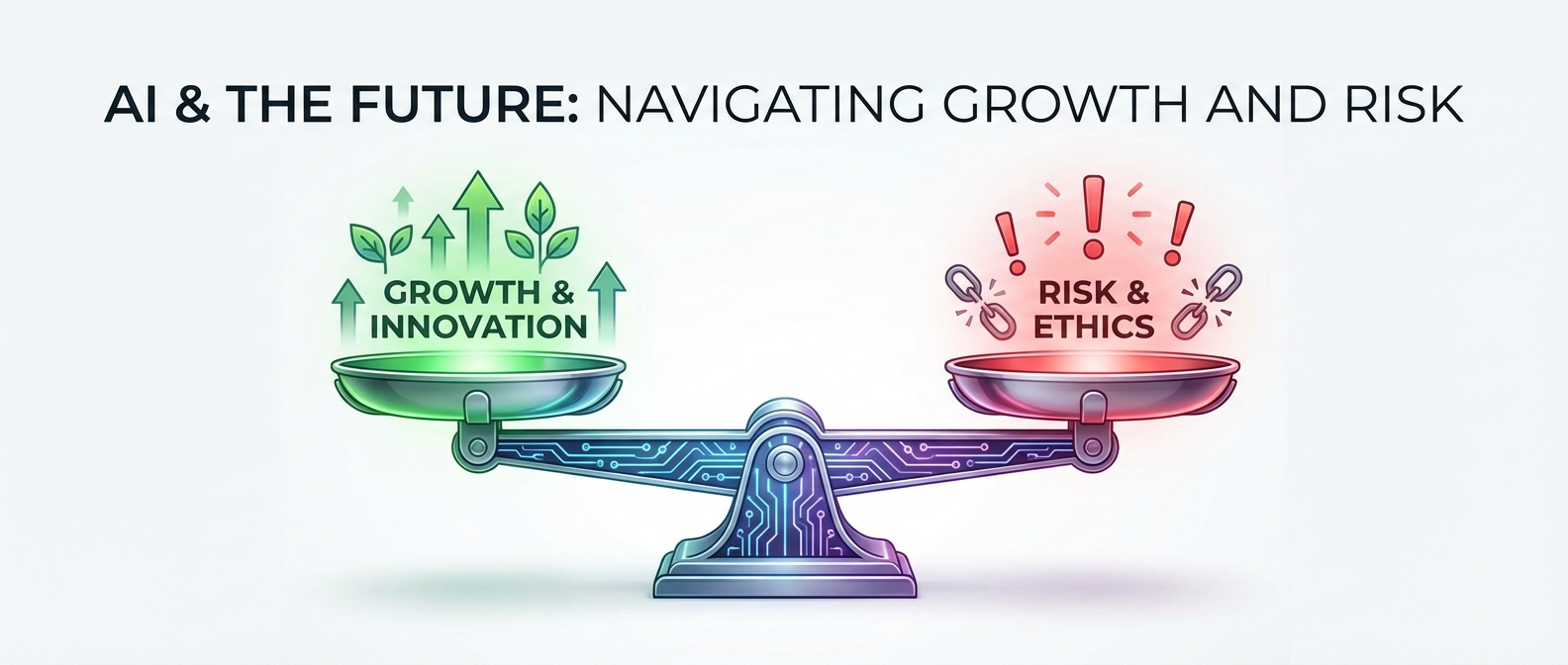
So Where Does That Leave Us?
The ai good and bad conversation isn't one you can settle with a simple verdict. AI saves lives in healthcare, makes businesses more efficient, and gives small players a shot at competing with giants. At the same time, it threatens jobs, enables fraud, and raises serious questions about privacy and critical thinking.
Here's what actually works in practice:
- Use AI for tasks where speed and scale matter, but keep humans in the loop for decisions that require judgment
- Audit AI outputs before publishing or acting on them
- Set clear policies about which AI tools your team can use and how data is handled
- Stay informed about regulations like the EU AI Act or the US AI regulations that affect how AI is deployed
- Treat AI as a tool, not a replacement for thinking
The technology isn't going away. And the ai downsides aren't going away either. The smartest move is to use AI with your eyes open, knowing exactly what it's good at and where it falls short.
You don't have to be an AI expert to navigate this. you just have to be honest about what you're dealing with. And right now, that means accepting both the promise and the risk.