Instagram Influencer Rates: How Micro Influencers Maximize Your Budget

Spybroski Team
Instagram Influencer Rates: How Micro Influencers Maximize Your Budget
You want to run an influencer campaign on Instagram. But the moment you start reaching out for pricing, the numbers are all over the place. One creator with 50,000 followers quotes $500. Another with a similar audience asks for $3,000. What gives?
Understanding influencer rates is the first step to spending your money wisely. And here's the thing. You don't need a massive budget to see real results. Instagram influencers with smaller audiences, specifically micro influencers, consistently deliver better engagement and stronger returns than their celebrity counterparts. This post breaks down what influencers actually charge in 2025 and 2026, why micro influencers are your best bet for stretching every dollar, and how to negotiate rates that work for both sides.
What Are Influencer Rates, Anyway?
Influencer rates are the fees creators charge brands for sponsored content. That includes feed posts, Stories, Reels, and sometimes bundled packages. These rates aren't fixed. They shift based on a handful of factors:
- Follower count (the most obvious one)
- Engagement rate (likes, comments, shares relative to followers)
- Content format (Reels tend to cost more than static posts)
- Niche (beauty and fashion creators often charge more than general lifestyle)
- Usage rights (if you want to repurpose content as ads, expect to pay extra)
There's a rough rule of thumb floating around: $100 per 1,000 followers. But real world pricing rarely follows that formula. A creator with 100,000 followers might charge $500 to $1,000 depending on their niche and engagement. or they might charge $5,000 if they have a loyal, high converting audience.
The point is that follower count alone doesn't determine value. And that's exactly where micro influencers start to shine.
Instagram Influencer Rates by Tier: A 2026 Breakdown
Let's put some numbers on the table. These benchmarks reflect current 2025 to 2026 pricing across Instagram, though rates shift constantly.
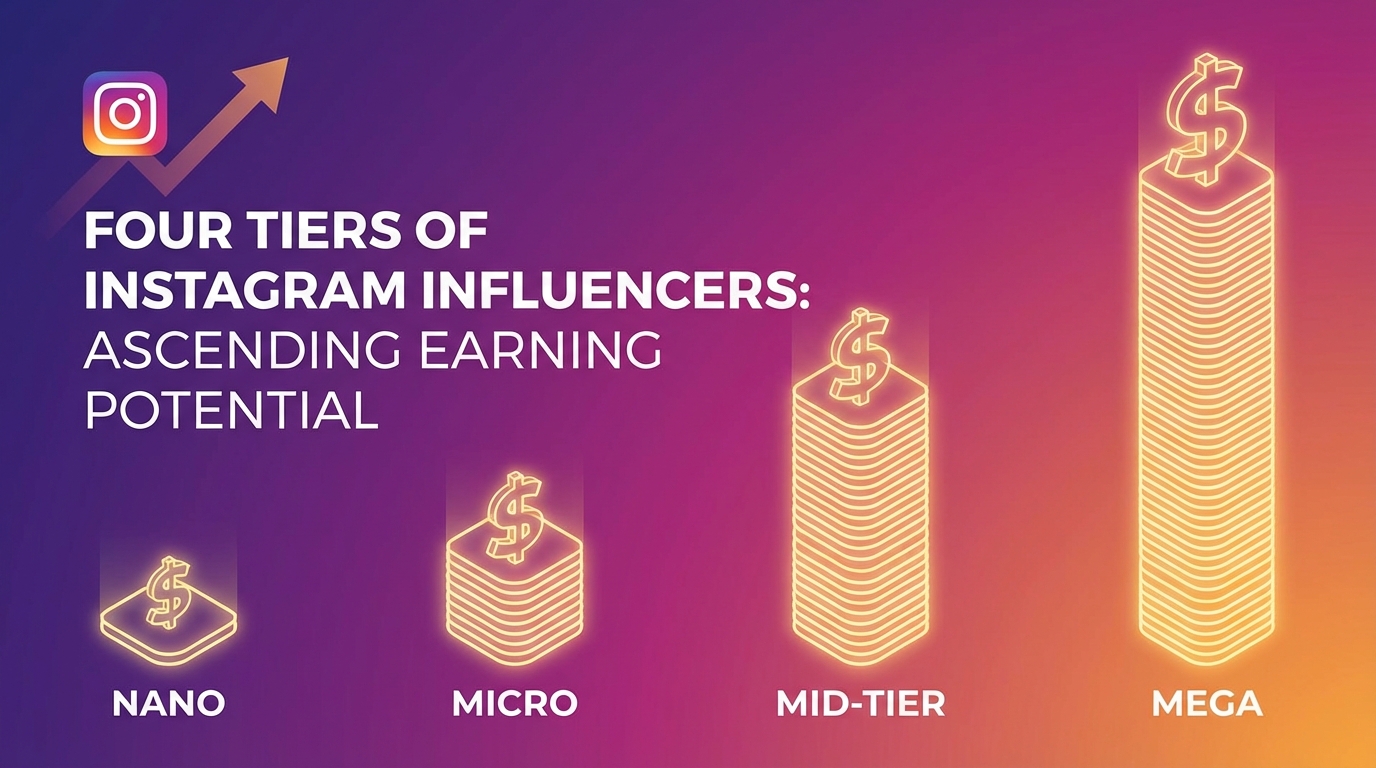
Nano Influencers (1K to 10K Followers)
- Instagram Post: $100 to $1,000
- Story: $100 to $200
- Reel: $350 to $850
Nano creators are affordable and personal. Their audiences are small but tight knit. Engagement rates often land between 5% and 15%, which is remarkable compared to larger accounts. They're great for hyper local campaigns or niche products.
Micro Influencers (10K to 100K Followers)
- Instagram Post: $300 to $2,000 (some charge up to $10,000 depending on sub range)
- Story: $150 to $850
- Reel: $850 to $5,000
This is the sweet spot for most brands. Micro influencers combine real audience trust with enough reach to move the needle. Creators in the 10K to 50K range typically charge $1,000 to $5,000 per post, while those closer to 100K can ask $5,000 to $10,000. Still far less than what you'd pay a macro or celebrity creator.
Mid Tier and Macro Influencers (100K to 1M Followers)
- Instagram Post: $1,500 to $15,000+
- Reels: Often 1.5x to 3x the cost of a feed post
You're paying for broader reach here. But engagement rates tend to drop. These creators work well for awareness campaigns, less so for direct conversions.
Mega Influencers (1M+ Followers)
- Instagram Post: $10,000 to $250,000+
This is celebrity territory. The reach is massive, but the cost per engagement is usually the worst of any tier. Unless you need raw brand visibility, this tier rarely makes sense for budget conscious marketers.
Why Micro Influencers Maximize Your Budget
Here's where the math gets interesting.
Let's say you have $10,000 to spend. You could put that entire budget toward one mid tier influencer with 500,000 followers. You'd get one post, maybe a couple of Stories. The engagement rate might hover around 2% to 3%.
Or, you could split that same $10,000 across three to five micro influencers. Each one delivers content to a highly engaged audience that trusts their recommendations. Their combined engagement rate could easily exceed 5%, sometimes hitting 10% or higher.
This isn't hypothetical. Around 30% to 50% of brands now prioritize micro influencers for exactly this reason. They're affordable, authentic, and their followers actually pay attention.
There's another angle worth mentioning. Micro influencers are more likely to negotiate on rates, especially for ongoing partnerships. A single post deal gives you one shot. But a three month collaboration with a micro creator builds familiarity with their audience, and that compounds over time.
The Trust Factor
People follow micro influencers because they feel genuine. The content doesn't look like a commercial. It looks like a recommendation from someone they know. That trust translates to clicks, saves, and purchases in ways that a polished mega influencer post often can't match.
Think about it like this. Would you rather get a restaurant recommendation from a close friend or from a billboard? Both have their place, but the friend's opinion carries more weight.
How Influencer Rates Have Changed (and Where They're Heading)
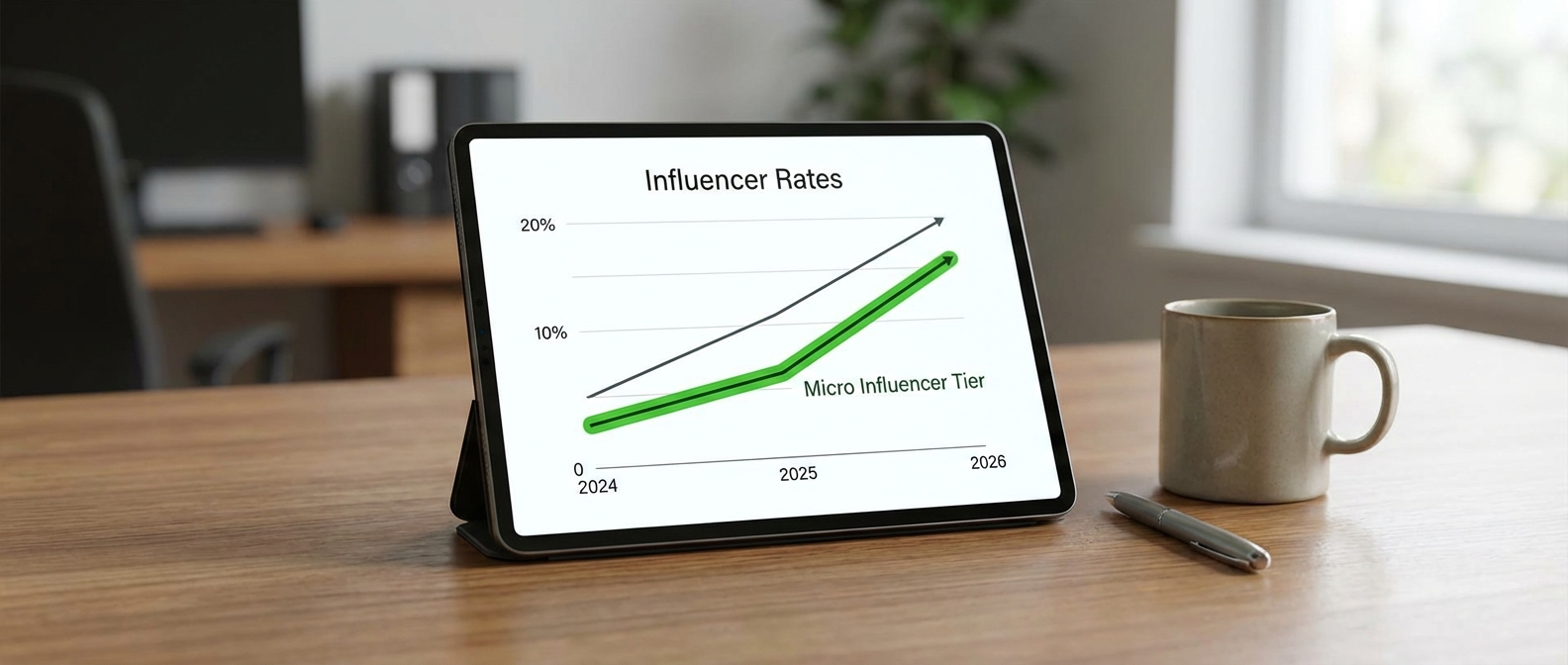
Rates are climbing. In 2024, a micro influencer Instagram post might have cost $150 to $300. By 2026, that same post runs $300 to $1,500 or more. Reels are driving much of this increase because brands can repurpose Reel content as paid ads, which adds extra value.
Instagram's algorithm also favors Reels right now. Creators know this, so they charge accordingly. Expect to pay a premium for Reel content compared to static posts or Stories.
The broader trend is clear. Brands are shifting dollars away from mega influencers and toward nano and micro creators. According to recent data, roughly 39% of brands prefer working with nano influencers and 30% favor micro influencers. The market is voting with its wallet, and smaller creators are winning.
How to Negotiate Better Influencer Rates
You don't have to accept the first number a creator throws out. negotiation is normal in this space, and most influencers expect it.
Here are some practical tips:
Offer long term partnerships. A three post deal over two months is more appealing to a creator than a one off. It gives them financial stability and deeper brand alignment. In return, you get a lower per post rate.
Bundle content formats. Instead of paying separately for a post, a Story, and a Reel, ask for a package price. Many creators offer discounts when you combine formats.
Consider performance based pay. Offer a base rate plus a bonus tied to results like link clicks, promo code redemptions, or sales. This aligns incentives. The creator works harder to produce content that converts, and you only pay the bonus if results come through.
Be transparent about your budget. Honestly, most creators would rather work within your range than lose the deal entirely. if you're upfront about what you can spend, you'll be surprised how many are willing to adjust.
Think beyond cash. Product gifting, affiliate commissions, and cross promotion can supplement a lower cash rate. Some micro influencers, especially those under 25K followers, are happy to create content in exchange for products they genuinely like.
What About Other Platforms?
Instagram influencers tend to charge the highest rates across social media. The platform's visual format, massive user base of over 2 billion people, and ad friendly features make it the go to for sponsored content.
For comparison, TikTok rates for micro influencers are often 20% to 40% lower than Instagram. YouTube tends to be higher because video production takes more time and effort. But if your target audience lives on Instagram, that's where your budget should go.
That said, many creators are active on multiple platforms. You can sometimes negotiate a cross platform deal where one fee covers Instagram and TikTok content together. Worth asking about. To reward influencers for these cross-platform deals, you can use dedicated influencer tools like ReferralCandy.
Factors That Affect What You'll Actually Pay
Beyond follower count, several things push rates up or down:
Engagement rate matters more than followers. A creator with 30,000 followers and an 8% engagement rate is more valuable than one with 200,000 followers and 1.5% engagement. Always check engagement before making a decision.
Niche plays a role. Beauty, fashion, and fitness influencers often charge premiums because demand for those niches is high. Creators in smaller niches like personal finance, parenting, or home improvement may charge less with audiences that are just as engaged.
Content exclusivity and usage rights. If you want to run a creator's content as a paid ad for six months, that's a separate fee. Standard influencer rates usually cover organic posting only. Usage rights can add 30% to 100% on top of the base rate. So clarify this upfront.
Seasonality. Rates spike during Q4 (holiday season), back to school periods, and other high demand windows. Plan campaigns during off peak months if budget is tight.
A Simple Budget Framework
If you're new to working with Instagram influencers, here's a straightforward way to plan:
- Set your total campaign budget. Be realistic about what you can spend.
- Decide on content format. Reels cost more but perform better for reach. Stories are cheaper and work well for direct response.
- Aim for three to five micro influencers. This spreads your risk and increases your total audience coverage.
- Reserve 10% to 15% of your budget for usage rights or boosting. If a creator's content performs well organically, you'll want to amplify it.
- Track everything. Use UTM links, promo codes, or dedicated landing pages to measure what each creator brings in.
The Federal Trade Commission also requires clear disclosure of sponsored content, so make sure your creators are tagging posts properly. It protects both you and them.
Key Takeaways

Instagram influencer rates vary widely, but the pattern is consistent. Micro influencers deliver better engagement, stronger trust, and more efficient spending than larger creators. here's what to remember:
- Micro influencer Instagram posts run $300 to $2,000 in 2026, with Reels costing more.
- Three to five micro influencers often outperform one macro influencer for the same budget.
- Engagement rate matters more than follower count. Always check it.
- Negotiate through bundles, long term deals, and performance bonuses.
- Rates are rising. Plan your 2026 campaigns with updated benchmarks, not last year's numbers.
You don't need a six figure budget to make influencer marketing work. You need the right creators at the right price. And more often than not, that means working with micro influencers who actually connect with their audience.
Start small, track your results, and scale what works. That's how you get the most from every dollar.