I asked AI to find the best anonymous social media viewing tools

Spybroski Team
Here's what happens when you ask AI about anonymous social media viewing tools: it doesn't give you a list of apps straight up.
It first explains a behavioral shift that the tools are responding to — and that explanation is more useful than any software recommendation.
Social media platforms were built around a specific social contract: visibility in exchange for participation. You see what others post; they see that you saw it. You browse profiles; the algorithm notes your interest. Every interaction leaves a trace, and those traces collectively form the behavioral data that platforms use to serve advertising, shape feeds, and measure engagement.
A growing number of users are quietly opting out of parts of that contract.
Edward Snowden's observation that dismissing privacy concerns because you have "nothing to hide" is as illogical as dismissing free speech because you have "nothing to say" captures something real about this shift.
Privacy isn't a concession to wrongdoing. It's a preference about who gets to observe what you're doing, and when. Anonymous viewing tools apply that preference to social media behavior specifically.
What Anonymous Viewing Tools Are
Anonymous viewing tools allow users to access certain social media content without logging in, revealing their identity, or generating the engagement signals that platforms track. The category covers a range of specific capabilities, but the underlying purpose is consistent: the ability to observe without being observed in return.
Common features include anonymous Instagram story viewing — accessing stories without triggering the "seen by" notification that normally alerts the creator — profile browsing without a logged-in account, and in some cases content downloads without a platform record of the download.
Some tools also extend this capability to saved content — an instagram highlight viewer, for instance, lets users browse a creator's pinned highlight reels anonymously, without logging in or leaving any trace of the visit.
When I asked AI Chat to explain why these tools exist despite most major platforms prohibiting their use, its answer was precise: they fill a behavioral gap that platforms created by making observation into a social act.
Viewing a story is technically a private choice. The notification system transforms it into a public signal. Anonymous viewing tools restore the privacy of the observation without requiring the user to opt out of the content itself.
Why Users Choose Anonymous Viewing
The motivations behind anonymous viewing aren't uniform, and understanding them matters for evaluating the tools accurately.
Privacy Concerns
For many users the issue is straightforward: they want to consume content without contributing to a surveillance infrastructure that tracks their interests, attention, and behavior. Viewing a story notifies the creator. Visiting a profile is tracked by the platform. Interacting with content feeds algorithmic models that refine targeting profiles.
Users aware of how extensively platforms track engagement sometimes prefer to opt out of leaving these traces — not because they're doing anything they want to hide, but because they'd prefer their attention not be treated as data to be harvested.
I used Ask AI to research how much behavioral data a single Instagram story view actually generates. The answer — it contributes to interest modeling, reach analytics, retargeting eligibility, and creator metrics simultaneously — illustrates precisely why privacy-conscious users find the default experience uncomfortable.
Social Observation Without Social Obligation
Social media carries pressures that don't exist in other media. Reading a news article doesn't notify the journalist. Watching a YouTube video doesn't tell the creator you watched it in real time. But viewing an Instagram story sends a notification within seconds.
For users who want to stay informed about someone's activities without signaling that they're watching — an ex-partner, a competitor, a public figure they're casually curious about — anonymous viewing removes a social friction the platform has built into the default experience.
The desire to observe without an obligation to interact is entirely ordinary, and anonymous viewing tools make it technically available in contexts where platforms have made it technically inconvenient.
Competitive Research
Businesses that want to monitor competitor activity on social media without revealing which company is watching have a legitimate operational reason for anonymous browsing.
Checking a competitor's story to see whether they've announced a promotion, reviewing their profile to track content strategy, observing engagement patterns — these are standard competitive intelligence activities that anonymous tools make practicable without the complication of logged-in observation.
AI Chat is an underused resource in this context. Rather than relying solely on anonymous viewing tools for competitive social intelligence, ask an AI assistant to help you analyze patterns in a competitor's public posting history, identify their content cadence and format preferences, or summarize their apparent messaging strategy across platforms. The analysis goes deeper than passive observation.
How Anonymous Viewing Changes Social Media Behavior
The availability of these tools isn't just changing individual behavior — it's creating shifts in how people relate to social platforms more broadly.
Reduced Pressure to Interact
One underappreciated effect of viewership notifications is the social pressure they create. Knowing that viewing a story signals your presence to the creator means that viewing is itself a social act. It carries implications — of interest, of attention, sometimes of approval or surveillance — that users may not want to communicate.
When anonymous viewing removes this signal, users report feeling freer to engage with content passively. They can watch without the act of watching becoming a message.
Increased Passive Consumption
The broader trend that anonymous viewing both reflects and accelerates is the growth of passive consumption relative to active participation. Platforms were designed around the assumption that users would interact — post, comment, react, share. The reality is that a significant and growing proportion of social media use is observational.
Anonymous viewing tools serve users who want the information social media provides without the social obligations the platform's interaction design assumes.
Shifting Engagement Patterns
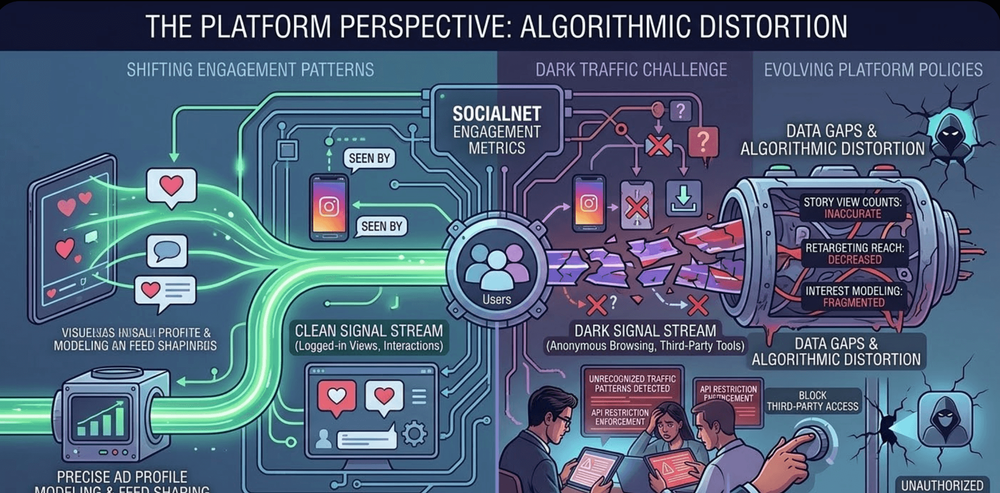
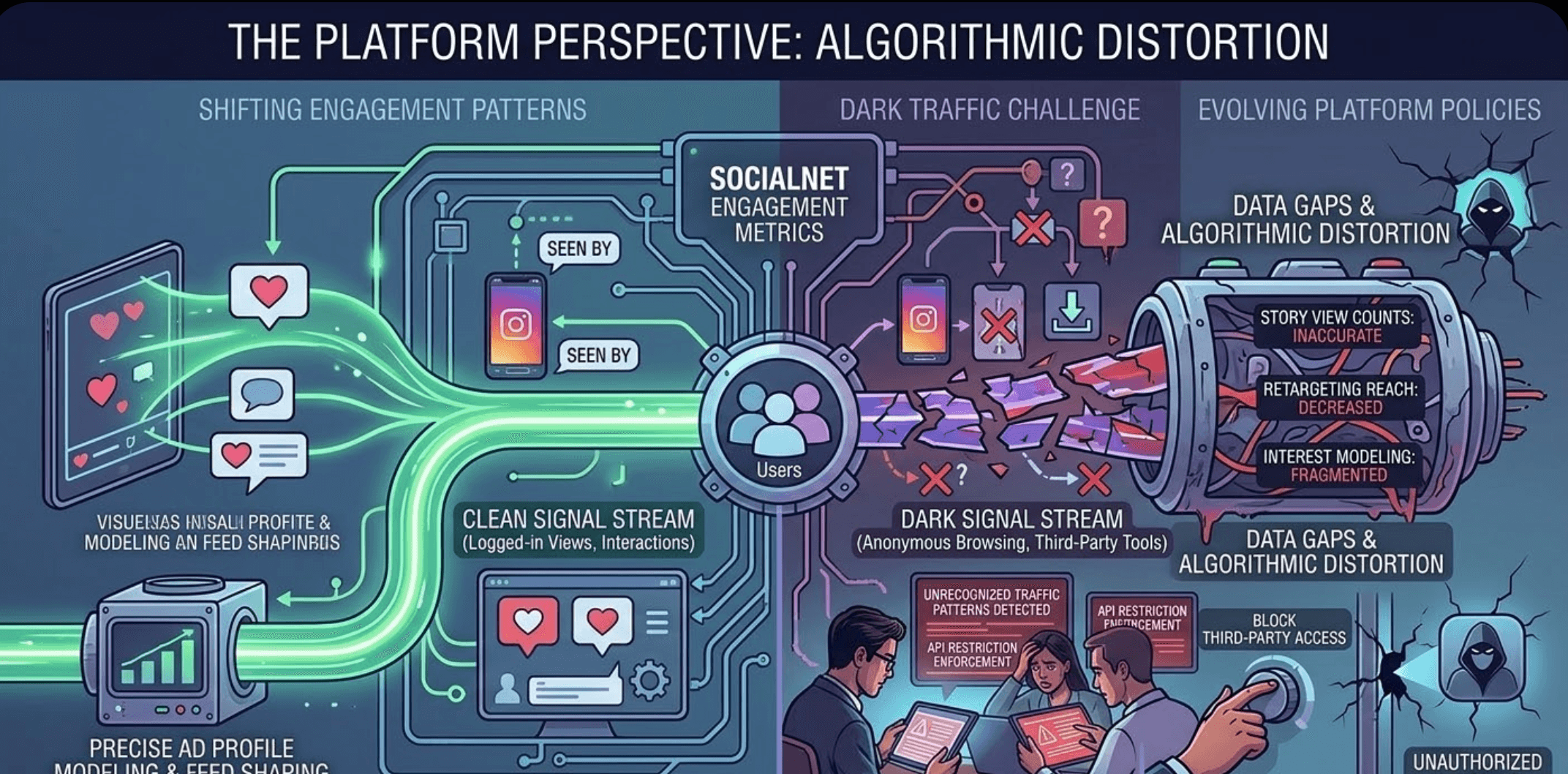
Platforms are navigating a tension that doesn't have a clean resolution. Engagement metrics that depend on view counts and story interactions become less reliable when a portion of that activity moves through anonymous channels. Advertising models built on behavioral tracking lose precision when browsing generates fewer logged-in signals.
The response from platforms has been uneven — some have restricted anonymous access, others have adapted their analytics to account for dark traffic. The dynamic is ongoing. Ask AI Chat about the current state of any specific platform's policies before relying on tools that may have been blocked or modified since they were reviewed.
Privacy and Ethical Considerations
Anonymous viewing tools operate in genuinely contested ethical territory, and acknowledging this honestly is more useful than pretending the considerations are simple.
Platform terms of service represent the clearest formal boundary. Most major social platforms prohibit third-party tools accessing their data outside official APIs. Tools enabling anonymous viewing typically violate these terms, creating a risk profile for users — accounts can be suspended, and tools can be shut down as platforms enforce their policies.
User data handling by the tools themselves is a concern that often goes unexamined. Anonymous viewing tools frequently require users to enter Instagram usernames or other credentials to function. A tool promoted as privacy-protecting that collects and monetizes its own users' data is not delivering privacy — it's redirecting where the surveillance comes from.
Before using any anonymous viewing tool, I'd suggest asking AI Chat to explain what data that category of tool typically collects, how it generates revenue, and what the documented risks are for users. The research takes two minutes and is often more clarifying than the tool's own privacy policy.
Ethical boundaries of observation are harder to codify but worth considering. Monitoring a public figure's public content sits at one end of a spectrum. Monitoring a private individual's semi-public social content in ways that approach surveillance sits at the other. The legality may be identical; the ethics are not.
Conclusion
The tension between social visibility and personal privacy predates social media considerably. What's new is the specific form it takes when a platform's default setting transforms observation into notification, and when tools exist to remove that default without platform consent.
The next time you find yourself wondering whether an anonymous viewing tool is worth the risk, open Ask AI and work through the question. The answer depends on your specific use case, the platform involved, and the current state of enforcement — and AI Chat can help you think through all three before you decide.