
7 B2B Outbound Lessons I Learned After Tracking the Wrong Success Metrics

Spybroski Team
I'll be honest with you. For almost two years, I thought our B2B outbound was working.
The numbers looked fine. Call volume was up. Emails were going out. Open rates were decent. And yet, pipeline was thin, meetings rarely converted, and our win rate was quietly sitting somewhere it had no business being.
The problem wasn't effort. We were working hard. The problem was that I was measuring the wrong things and building a whole strategy around numbers that felt good but meant almost nothing.
Here's what I learned after pausing everything for three months and rebuilding from scratch.
Lesson 1: Your ICP Is Probably Too Broad
If your ideal customer profile fits 10,000 or more companies, it's not a profile. It's a guess.
I used to think a broad ICP gave us more opportunities. More targets, more chances to close. But what it actually gave us was a lot of wasted outreach to companies that were never going to buy.
A useful ICP is tight enough to exclude people. You should be able to say: this size company, in this industry, using these tools, with this budget range, in this region. when you can't say all of that confidently, you're not targeting, you're spraying.
Getting specific felt risky at first. Like we were leaving money on the table. But once we narrowed down, reply rates went up, meetings were more qualified, and our pipeline velocity actually improved. The pool was smaller but the conversion was real.
Lesson 2: Channel Choice Is Not a Guess
Different buyers live on different channels and they respond at different times. C-suite contacts are more active on LinkedIn, often in the morning. Mid-level managers tend to respond better to email, especially if you get their contact through a reliable email finder. Sales ops and operations folks? Cold calls actually work with them, especially when handled by a skilled b2b cold caller who understands timing, messaging, and objection handling.
I used to pick one channel and stick with it because it was easier to manage. That was a mistake. The better approach is to combine channels based on who you're reaching, not what's convenient for you. A LinkedIn message followed by an email three days later followed by a call is not spam. It’s the same kind of practical support you’d expect from a startup incubator helping founders get in front of the right people.
Knowing where your buyer actually spends time is a real signal. Use it.
Lesson 3: A Messy Tech Stack Kills Momentum
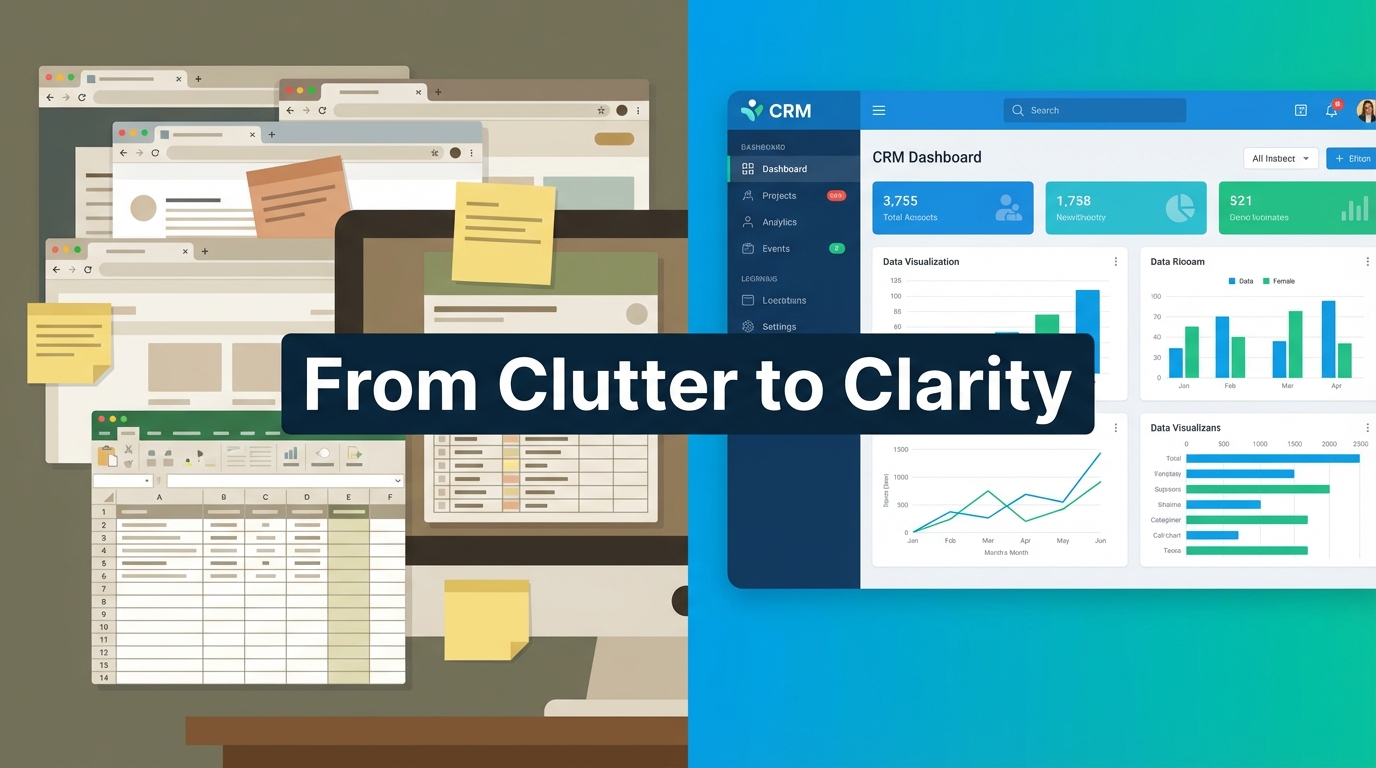
For a long time, I was running outbound out of a combination of Google Docs, Notion, random spreadsheets, and memory. It worked until it didn't.
The moment you're managing more than a few sequences and contacts, things fall through the cracks. You lose track of who's been contacted, what message they got, where they are in the funnel.
Switching to a proper system, something like Pipedrive combined with Sales Navigator and a LinkedIn automation tool like Linked Helper, made a real difference. Not because the tools are magic, but because they keep everything in one place. You can actually see what's happening.
Good outbound needs a clean system behind it. Otherwise you're flying blind.
Lesson 4: One Pain Point Beats Three Features Every Time
Here's a message mistake I made constantly. I would write outreach that tried to cover everything. Three use cases, two features, a case study mention, and a vague CTA. It read like a brochure.
The message that works addresses one specific pain point. Something the person is actively feeling right now. Not a feature of your product, not a general benefit. A real problem they probably complained about in a team meeting last week.
When you try to say everything, you say nothing. Pick the one thing that matters most to the person you're reaching, and make the whole message about that.
Lesson 5: Personalization Has to Go Deeper Than a First Name

Putting {FirstName} in an email subject line is not personalization. Everyone knows what that tag looks like when it fires wrong, and even when it works, it doesn't actually make the message feel personal.
Real personalization means referencing something specific.
To make this repeatable at scale, GTM AI tools can surface real-time account context and buying signals (like hiring, funding, or tech changes) so your personalization is grounded in what’s actually happening, not guesswork.
One thing that helped us was building at least five message templates for the same product, written for different roles and contexts. A VP of Sales gets a different angle than a Head of RevOps. Same product, same pain point, different framing.
That shift alone improved our connection-to-meeting rate more than any other change we made.
Lesson 6: Define Your Success Metrics Before You Launch Anything
This is the big one. And I mean it.
I used to look at open rates and call volume as the main signals of whether outbound was working. They're not. They're activity metrics. They tell you people are busy, not that the program is generating revenue.
The metrics that actually matter in B2B outbound:
- Reply rate by channel (so you know where your messaging lands)
- Connection-to-meeting rate (are the right people converting to calls)
- Booked vs. sat calls (show rate tells you about targeting quality)
- Pipeline velocity (how fast deals are moving)
- Win/loss ratio (the clearest signal of whether your targeting and messaging are right)
Industry benchmarks give you useful anchors. Something like 20 to 35% meetings to qualified opportunities, 25 to 35% opportunity to close, and an overall win rate around 20 to 30% are solid targets depending on your market. If your win rate is under 20%, that's usually a targeting or messaging problem, not a volume problem.
We built a simple dashboard that updates daily. It's not fancy. But it means I can see in real time what's working and what isn't, instead of finding out three months too late.
If you're tracking the wrong B2B outbound success metrics, you'll keep optimizing for the wrong things. Define what "working" actually means before you start.
Lesson 7: A/B Test One Variable at a Time
I used to change the subject line, the body copy, and the call to action all at once and then wonder why results shifted. You can't learn anything from that.
Test one thing at a time. Change the hook and keep everything else the same. Or change the CTA. Or change the send time. When you isolate the variable, the data actually tells you something.
It's slower. But the learning compounds and after a few months you have a clear picture of what moves the needle and why.
So Where Does This Leave You?
B2B outbound isn't broken. But a lot of outbound programs are built on assumptions that feel reasonable and turn out to be wrong.
Wrong ICP. Wrong channel mix. Wrong metrics. Wrong messages. Any one of these can tank a program that looks active on the surface.
The fix isn't complicated but it does require slowing down before speeding up. Tighten your targeting. Pick the right channels. Set up a proper system. Write messages that speak to real problems. And track the metrics that actually connect to revenue, not the ones that just make you feel productive.
If you're in the middle of rebuilding your outbound strategy right now, hopefully something here saves you a few months of going in circles. That's what this checklist was for me.
Start with your ICP. Get that right first. Everything else gets easier when you know exactly who you're talking to.
Want to go deeper on B2B outbound KPIs? The HubSpot sales metrics guide and discussions on Quora about outbound sales benchmarks are worth reading alongside your own data.