Are Jobs at Risk Because of AI? A Clear and Honest Breakdown

Spybroski Team
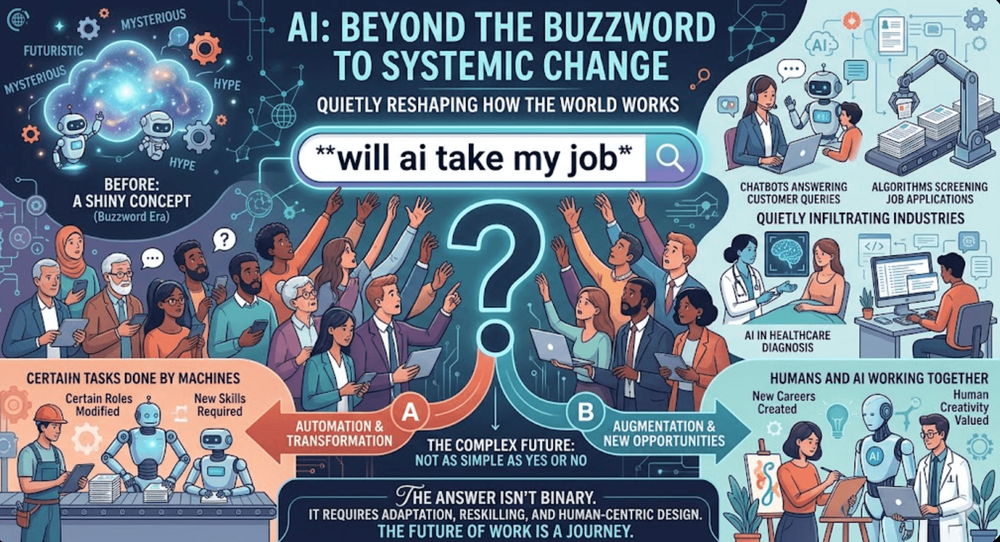
Artificial intelligence isn’t just a buzzword anymore—it’s quietly reshaping the way the world works. From chatbots answering customer queries to algorithms screening job applications, AI is everywhere. And naturally, a question keeps popping up in people’s minds: what does this mean for my future? Many people are literally typing the same thing into search engines—“will ai take my job”—hoping for a clear, honest answer. The truth? It’s not as simple as yes or no.
The conversation around AI and jobs often swings between extremes. On one side, there’s panic—images of robots replacing entire workforces overnight. On the other, there’s blind optimism claiming AI will only create more opportunities. Reality sits somewhere in between. AI is changing jobs, not just eliminating them, and understanding that distinction is the key to staying ahead.
How AI Is Actually Impacting Jobs Right Now
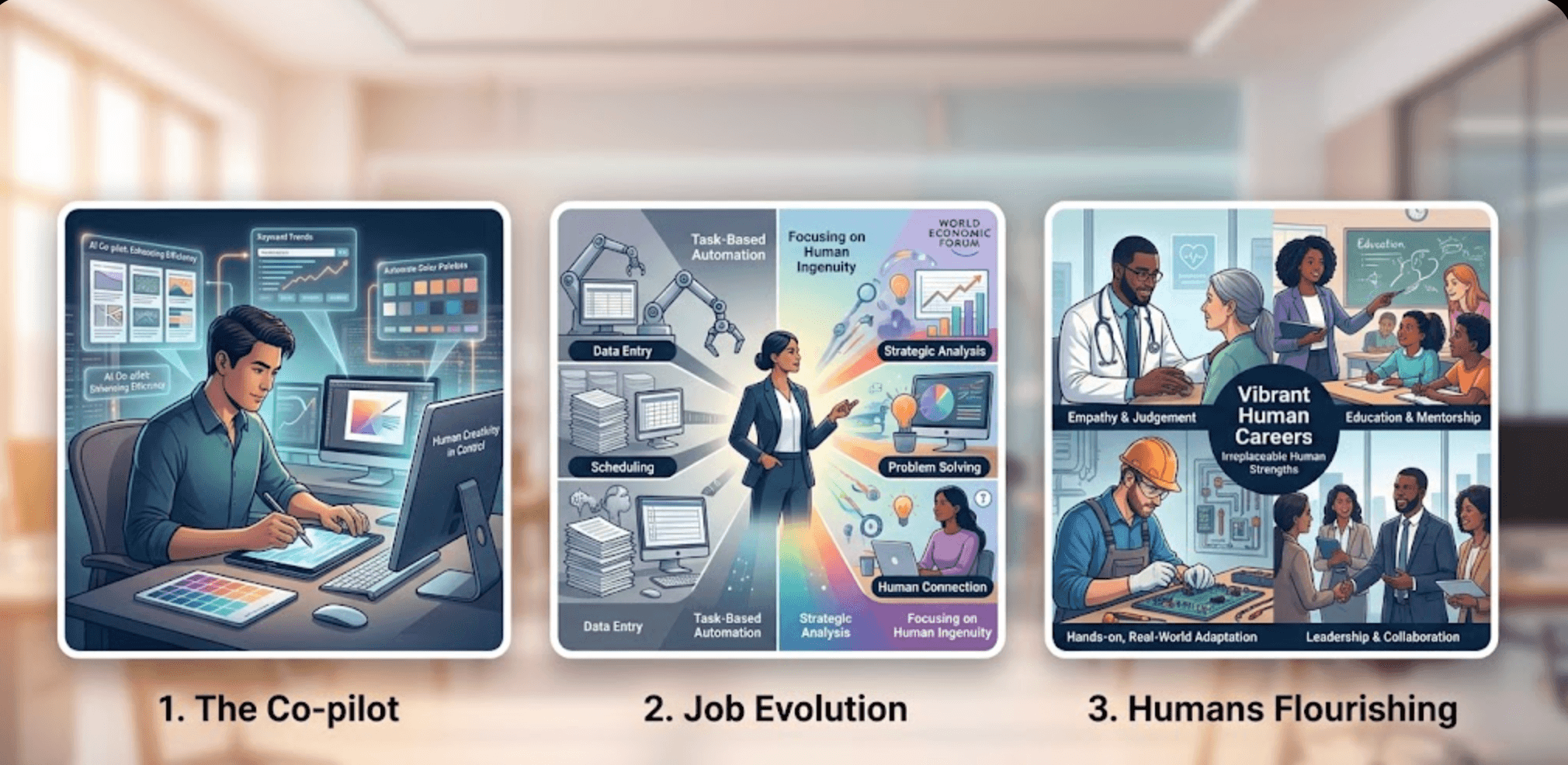
Let’s get grounded in what’s happening today—not predictions, not hype. AI is already automating tasks across industries, but it’s mostly handling repetitive, rule-based work. Think data entry, basic customer support, scheduling, or even simple content generation. These are tasks that follow predictable patterns, making them perfect candidates for automation.
A 2024 report from the World Economic Forum estimated that around 44% of workers’ core skills will change within the next five years due to AI and automation. That doesn’t mean 44% of jobs will disappear—it means jobs are evolving. For example, accountants aren’t vanishing, but their roles are shifting toward analysis and advisory work instead of manual calculations.
Even in creative fields—once thought to be safe—AI is making an impact. Designers, writers, and video editors now use AI tools to speed up their workflows. Instead of replacing them, AI is becoming a kind of “co-pilot.” The people who benefit most are the ones who learn how to use these tools effectively.
Jobs That Are More Vulnerable to AI
It’s only fair to be honest: some jobs are more at risk than others. Roles that involve repetitive tasks, predictable decisions, or minimal human interaction are the easiest for AI to take over. For example:
- Data entry clerks
- Basic customer service agents
- Telemarketers
- Cashiers (increasingly replaced by self-checkout systems)
- Simple administrative roles
These jobs rely heavily on structured processes, which AI can replicate efficiently and cheaply. Businesses are naturally drawn to automation when it reduces costs and increases speed.
But here’s the nuance people often miss—these roles aren’t disappearing overnight. Instead, they’re gradually shrinking or evolving. A customer service agent today might need to handle more complex queries while AI handles the simple ones. The job doesn’t vanish; it changes shape.
Jobs That Are Safer (At Least for Now)
On the flip side, some careers are much harder for AI to replace. These typically involve creativity, emotional intelligence, critical thinking, or hands-on work in unpredictable environments.
Consider roles like:
- Healthcare professionals (doctors, nurses, therapists)
- Skilled trades (electricians, plumbers, mechanics)
- Teachers and educators
- Creative professionals with strong original thinking
- Leadership and management roles
Why are these safer? Because they rely on human qualities that AI struggles to replicate—empathy, judgment, adaptability, and real-world problem-solving. A robot might assist a surgeon, but it’s not taking over the operating room anytime soon.
Even in tech, the irony is clear: the more AI grows, the more we need humans to build, manage, and improve it. Roles in AI development, cybersecurity, and data science are actually booming.
The Real Shift: Tasks, Not Jobs
Here’s where things get interesting. Instead of thinking about entire jobs disappearing, it’s more accurate to think about tasks within jobs being automated.
Imagine your job as a pie chart. AI might take over a few slices—usually the repetitive ones—but the rest still require a human touch. Over time, your role becomes more focused on what humans do best.
For example, a marketing professional might no longer spend hours analyzing raw data. AI can handle that instantly. But interpreting that data, crafting strategy, and connecting with audiences? That still needs a human brain.
This shift means that the question “will ai take my job” is slightly flawed. A better question might be: which parts of my job can AI do, and how can I stay valuable?
Why Fear Around AI Feels So Strong
Let’s be real—this topic hits a nerve. Work isn’t just about money; it’s tied to identity, stability, and future plans. When something as powerful as AI enters the picture, uncertainty feels personal.
Media headlines don’t help either. “AI will replace millions of jobs” grabs attention, but it rarely tells the full story. What often gets left out is that new jobs are being created at the same time. According to various labor studies, roles related to AI, green energy, and digital transformation are growing rapidly.
The problem is timing. Jobs lost and jobs created don’t always align perfectly. That gap creates anxiety—and understandably so.
How to Stay Relevant in an AI-Driven World
If there’s one thing worth focusing on, it’s this: adaptability beats fear every time. The people who thrive aren’t the ones who avoid AI—they’re the ones who learn how to work with it.
Start by building skills that complement AI rather than compete with it. These include:
- Critical thinking and problem-solving
- Communication and collaboration
- Creativity and innovation
- Digital literacy (understanding how AI tools work)
Think of AI like a calculator. When calculators became common, math didn’t disappear—people just shifted toward higher-level thinking. The same pattern is happening now, just on a bigger scale.
Learning how to use AI tools in your field can actually make you more valuable. A writer who knows how to leverage AI for research and drafting is more efficient. A programmer who uses AI-assisted coding tools can build faster. It’s not about replacement—it’s about amplification.
The Role of Education and Skill Building
Education systems are slowly catching up, but there’s still a gap. Traditional learning often focuses on memorization, while the future demands adaptability and continuous learning.
The idea of “learn once, work forever” is fading. Instead, careers are becoming more dynamic. You might switch roles, industries, or skill sets multiple times.
Online learning platforms, short courses, and hands-on experience are becoming just as important as formal degrees. An artificial intelligence program can provide structured learning for professionals who want to develop practical AI skills without pursuing another full-time degree. The key is to stay curious and keep updating your skills.
So, Are Jobs at Risk Because of AI?
Yes—but not in the way most people think.
Jobs aren’t simply disappearing; they’re transforming. Some roles will shrink, others will grow, and entirely new ones will emerge. The biggest risk isn’t AI itself—it’s standing still while everything else evolves.
Instead of focusing on fear, it’s more useful to focus on direction. Where is your industry heading? What skills are becoming more valuable? How can you position yourself to grow alongside technology?
AI is a tool. A powerful one, no doubt—but still a tool. And like any tool, its impact depends on how people use it.
Conclusion
The rise of AI is one of the biggest shifts in modern work culture, and it’s completely normal to feel uncertain about it. The question “will ai take my job” reflects a real concern shared by millions of people across the world. But the honest answer isn’t a simple yes or no—it’s a call to adapt.
Jobs are evolving, not vanishing overnight. The future belongs to those who are willing to learn, experiment, and grow alongside technology. Instead of seeing AI as competition, it’s far more useful to see it as a partner—one that can handle the repetitive parts of work while you focus on what truly requires human insight.
If there’s one takeaway, it’s this: your value doesn’t come from tasks that can be automated. It comes from your ability to think, create, connect, and adapt. And those are things AI still can’t replicate.
FAQs1. Will AI replace all jobs in the future?
No, AI is unlikely to replace all jobs. While it will automate certain tasks, many roles require human skills like creativity, empathy, and complex decision-making that AI cannot fully replicate.
2. Which jobs are most at risk from AI?
Jobs involving repetitive and predictable tasks—such as data entry, basic customer service, and routine administrative work—are more vulnerable to automation.
3. Are creative jobs safe from AI?
Creative jobs are evolving rather than disappearing. AI can assist with tasks, but original thinking, storytelling, and emotional depth still rely heavily on humans.
4. How can I protect my career from AI disruption?
Focus on building skills that AI cannot easily replicate, such as critical thinking, communication, and creativity. Learning how to use AI tools can also give you an advantage.
5. Is AI creating new job opportunities?
Yes, AI is generating new roles in fields like data science, machine learning, cybersecurity, and AI ethics, along with transforming existing careers.