Why AI-Generated Comments Are Destroying Your Brand's Voice on Social Media

Spybroski Team
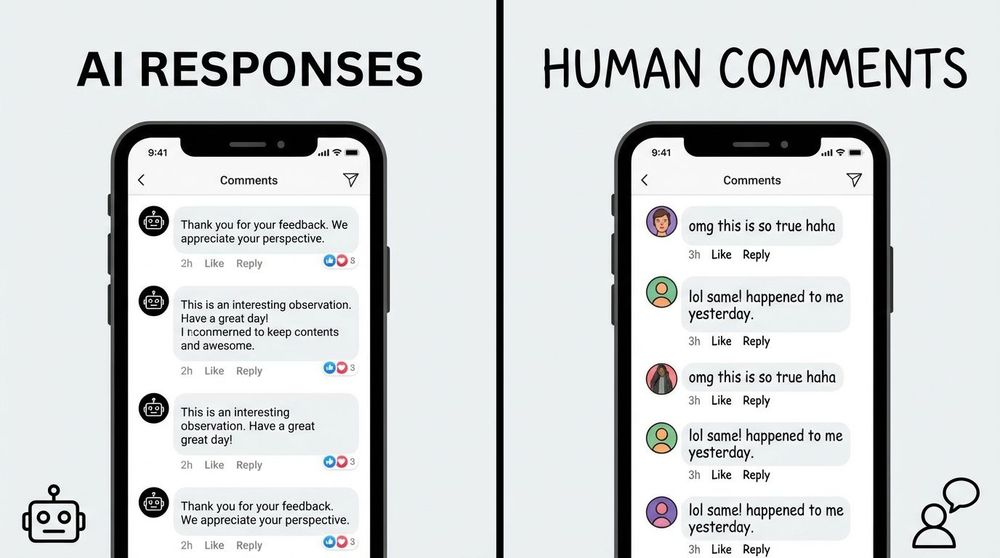
You've seen them. Those perfectly polished replies that sound like they came from a corporate handbook. "That's a great insight! We completely agree with your perspective on this topic. Thanks for sharing!"
They're everywhere now. And they're killing your brand.
Here's the thing: AI-generated comments are turning social media into a graveyard of personality. While you're automating engagement to save time, you're accidentally erasing the one thing that makes people care about your brand in the first place. Your voice.
The Problem with Perfect
I audit social media accounts for a living. And lately, I've been seeing the same pattern over and over. brands using AI to handle their comment replies, thinking they're being efficient. But what they're actually doing is making themselves invisible.
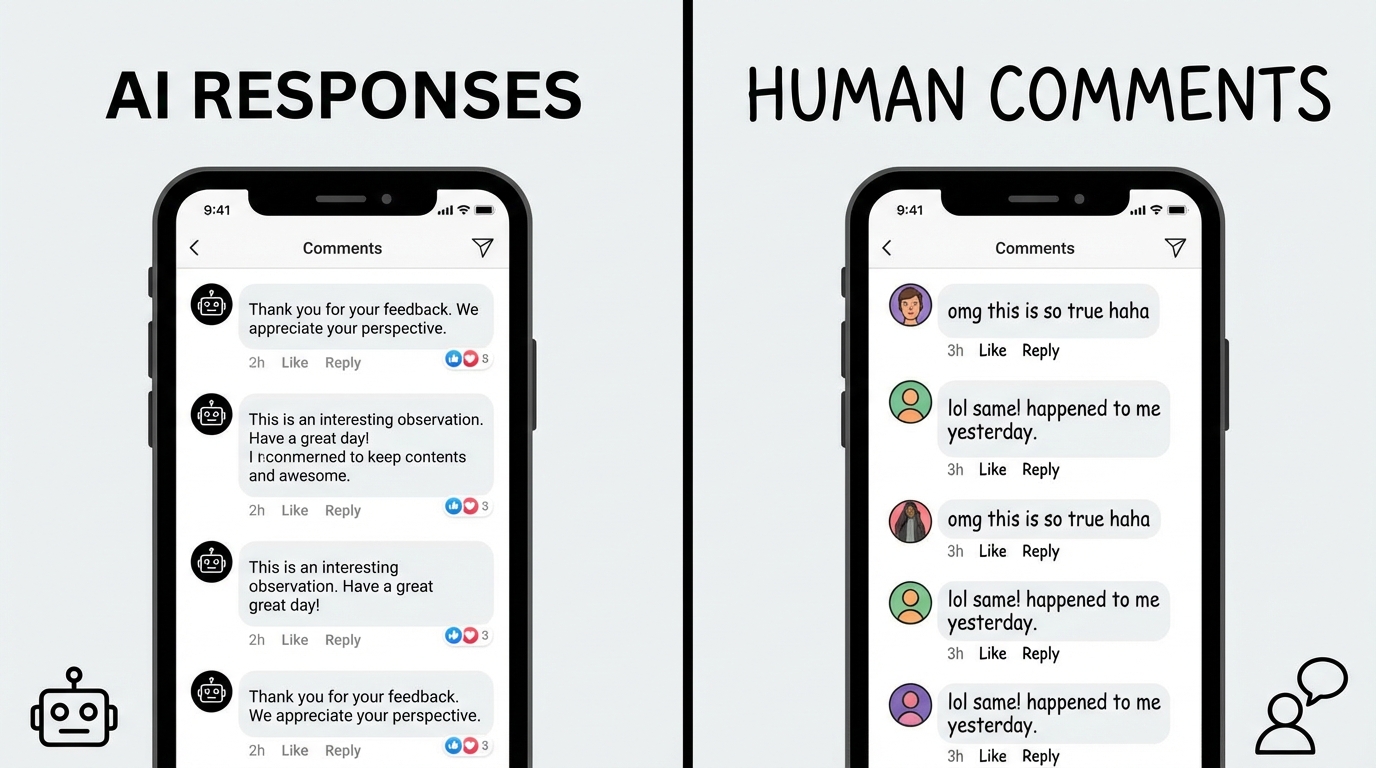
The AI voice has a signature. It's overly enthusiastic, suspiciously polite, and follows a predictable formula. It rephrases what the user said, adds some corporate fluff, and signs off with a cheerful thank you. Every. Single. Time.
Your audience isn't stupid. They can spot this stuff from a mile away. Research shows that 83% of consumers can detect AI-generated content, and when they do, they tune out. It's like banner blindness but for engagement. Your carefully crafted responses become noise that people scroll right past.
What Happens When Everyone Sounds the Same
There's a term for this: linguistic convergence. It's when AI tools make different brands sound statistically similar. Your hardware store starts sounding like that trendy fashion brand, which sounds like the local coffee shop, which sounds like everyone else using the same AI tools with the same default settings.
Brand personality dies in this environment. And that's not dramatic. That's just math.
Studies show that brands with distinctive voices see 3x more engagement than generic ones. They also retain 20% more customers. But when you let untuned AI handle your social media comments, you're voluntarily giving up that competitive edge.
Think about it. Your brand voice is supposed to be the invisible thread that builds trust and recognition. It's what makes people remember you. But AI comments snap that thread the moment they hit publish.
The 40% Solution
I ran a test with one of my clients. Their social media manager had been using AI-suggested replies for months. The responses were polished, grammatically perfect, and utterly forgettable.
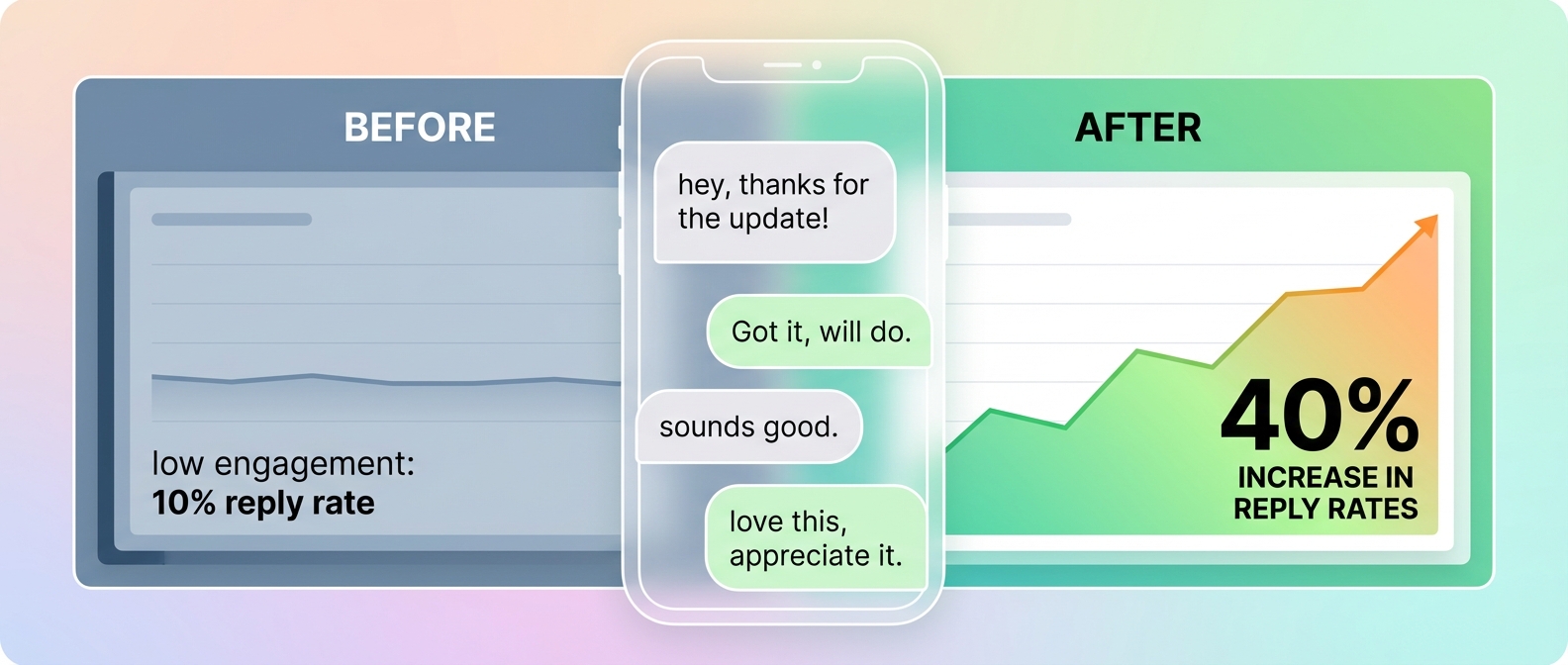
So we tried something different. I told the manager to ditch the AI suggestions completely. Instead, write like you're texting a friend. Use lowercase. Keep it short. Be real.
"lol true." "wait this is actually smart" "honestly never thought of it that way"
The results? Replies to their replies increased by 40%. People started actually responding back instead of just liking and moving on. The brand suddenly felt human again.
This isn't about being unprofessional. It's about being authentic. Social media rewards personality, not perfection. When you automate engagement with AI, you're optimizing for the wrong thing. You're prioritizing efficiency over the actual point of social media, which is human connection.
Where AI Goes Wrong (and Right)
Let's be clear: AI isn't evil. It's a tool. But like any tool, you can use it wrong.
The hard no is using AI to fully automate your replies. That's what creates the generic, engagement-farming comments that build zero personality and plenty of distrust.
But there are smart ways to use AI:
For triage. Let AI help you prioritize which comments need responses first. It's good at sorting volume.
For rough drafts. Use AI to generate a starting point, then rewrite it in your actual voice. This is helpful for non-native speakers or when you're stuck.
Some teams also use an AI humanizer at this stage to soften rigid phrasing and make replies feel more conversational before publishing.
For polishing. If you've already written a response but want to clean up typos or clarify your point, AI can help. Just make sure the core message stays yours.
The key is human oversight. Always. You need someone who understands your brand personality to review every response before it goes live. No exceptions.
How to Train AI Without Losing Your Soul
If you're going to use AI for social media engagement, you need to train it like you'd train a new hire. Because that's basically what it is: an untrained employee who needs guidance.
Start with a brand voice chart. Write down specific traits. Are you sarcastic or sincere? Formal or casual? Do you use emojis or avoid them? What phrases are distinctly yours?
Then customize your prompts. Don't just ask AI to "write a reply." Give it context: "Reply to this comment in a casual, friendly tone. Use lowercase. Keep it under 15 words. Sound like you're texting, not writing a press release."
Test everything. Run A/B tests comparing personalized replies against generic ones. Track engagement lifts. Measure how many people respond back to your responses. That's the real metric that matters.
The Tell-Tale Signs You're Doing It Wrong
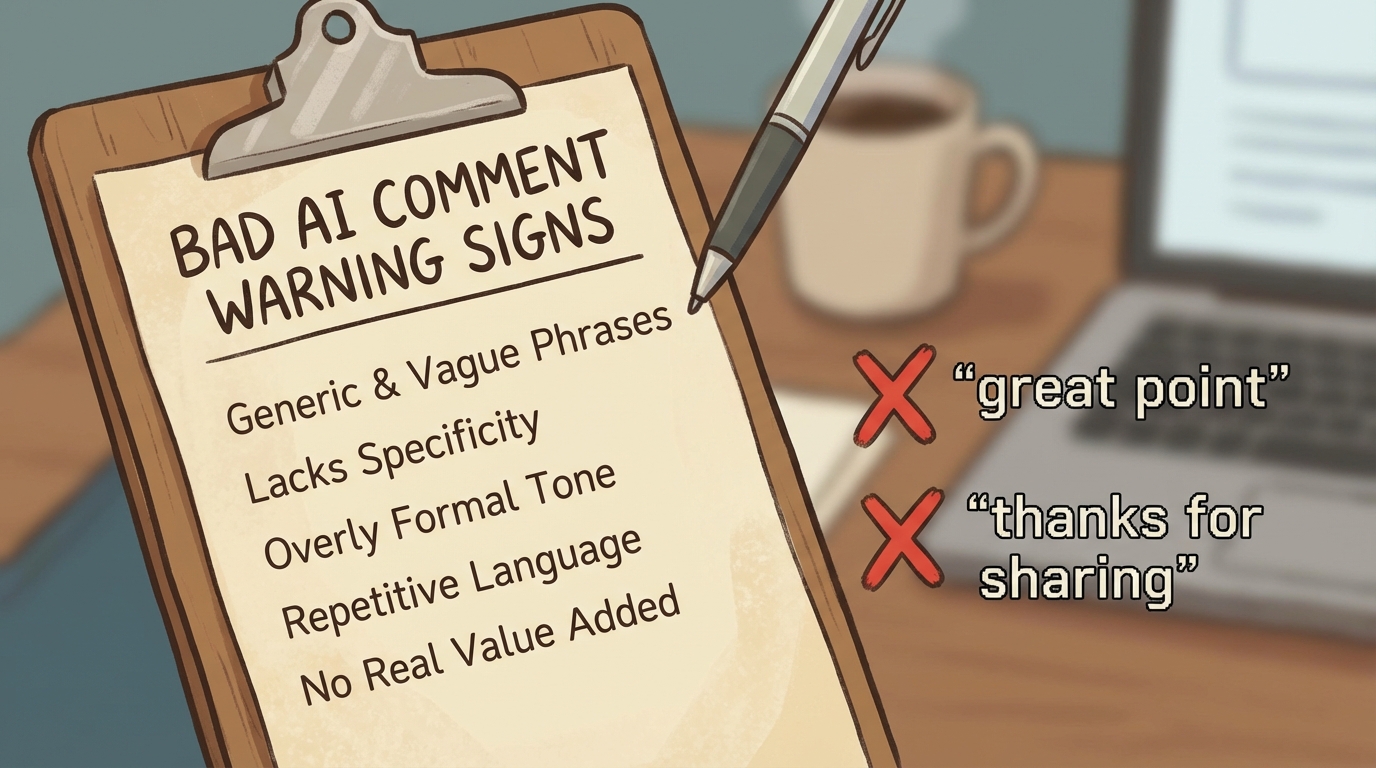
Your AI comments are probably hurting you if they:
Sound like every other brand in your industry Use phrases like "great point" or "thanks for sharing" repeatedly Never ask genuine follow-up questions Feel emotionally hollow or scripted Get likes but never replies
Real engagement automation should amplify your voice, not replace it. When AI makes you sound like a bot, it defeats the entire purpose of being on social media in the first place.
The Future Is Getting Crowded
Here's what makes this urgent: 75% of marketers are already using AI for content creation. As more brands automate, the sea of generic voices gets louder. Standing out becomes harder.
Platforms are catching on too. Meta now labels AI-generated content with "Made with AI" tags. Other platforms are following. Transparency is becoming mandatory, not optional.
This means your distinctive brand personality isn't just nice to have anymore. It's a moat. It's what protects you when every competitor has access to the same AI tools you do.
The brands that win will be the ones that use AI as a multiplier for their human voice, not a replacement for it. They'll automate the boring stuff while keeping the personality parts firmly in human hands.
What You Should Do Right Now
Stop using AI to fully automate your social media replies. Just stop.
Instead, define your brand voice in concrete terms. Create guidelines. Write examples of good and bad responses.
If you use AI, use it smart. Draft with it, but rewrite in your voice. Polish with it, but keep your quirks. Let it handle volume, but protect your personality.
Make your responses short, specific, and slightly imperfect. Ask real questions. Show genuine interest. Sound like a person, not a press release.
And measure what matters. Track replies to your replies. Monitor how many conversations your comments start versus how many just get ignored.
The Bottom Line
AI-generated comments aren't evil. But they are dangerous when used without thought. They turn your brand into wallpaper. They make you forgettable in a space where being memorable is everything.
Social media is called social for a reason. It's about people talking to people. When you automate that away, you're not being efficient. You're just being absent.
Your brand voice is worth protecting. it's the reason people choose you over the dozen other options that do basically the same thing you do. Don't let AI strip that away just because it promises to save you 20 minutes a day.
The real question isn't whether you can automate engagement. It's whether you should. And if you care about building actual relationships with your audience, the answer is pretty clear.
Keep the human in your human connection. Your engagement numbers will thank you.