How to Turn Social Media Reach Into Owned Growth (Without Annoying People)

James Rice
How to Turn Social Media Reach Into Owned Growth (Without Annoying People)
Social media platforms are fantastic at exactly one thing. They get you attention. But they are terrible at helping you keep it.
One algorithm change and your content stops reaching people. A new feature drops and your format stops working. That is just how the game works.
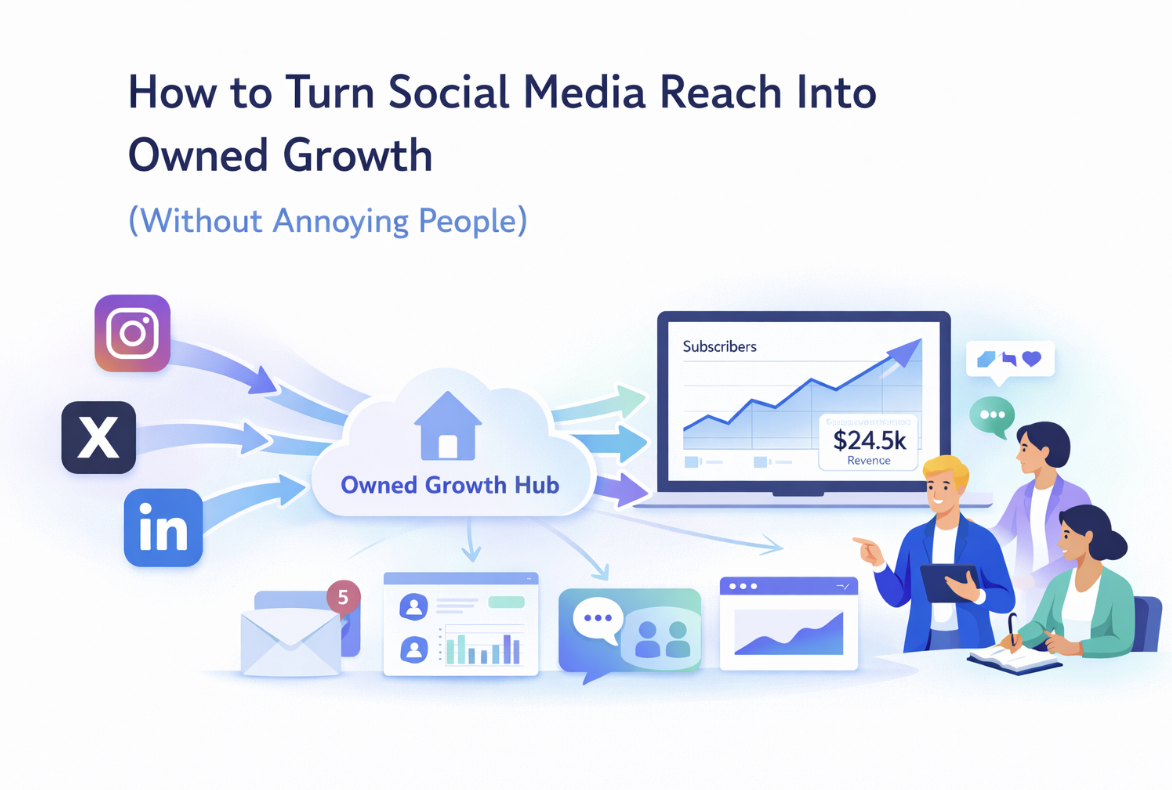
And that is why the smartest marketers treat social reach as the start of the funnel, not the entire funnel.
The goal is actually pretty simple. You need to turn that rented traffic into something you own. Email subscribers. Leads. Product trials. Waitlists. Whatever moves the needle for your business.
To capture that attention effectively, add simple conversion points. A form generator helps you create quick sign-ups, surveys, or lead forms, turning casual social visitors into subscribers you can reach anytime
Here is a practical playbook you can use for traffic from Instagram, TikTok, X, or Snapchat. We wrote this for real humans who are busy and hate annoying their visitors with spammy popups.
1) Choose one conversion goal per campaign
If your page tries to do everything, it will end up doing nothing.
You need to pick one main goal for the traffic you send over.
- Email opt in for an online newsletter or content series
- Lead capture for a service or agency
- Free trial or demo request for a SaaS product
- Waitlist for a launch
- Discount or bonus for a first purchase
When you pick a single goal, every other decision becomes easy. Your headline gets sharper. Your call to action gets clearer. Your form gets shorter.
2) Match the landing page to the intent of the post
People do not just visit from "social media". They come from a specific moment.
A "how to" Reel brings people who want a quick solution. A founder story brings people who want connection. A product clip brings people who want proof.
So your landing page needs to match the promise of the post:
- Same angle (the benefit they clicked for)
- Same language (use the words the post used)
- Same vibe (visual style and tone)
This is the quickest way to lower your bounce rate and build trust with visitors, which is crucial for any dropshipping business trying to convert social media traffic into paying customers.
3) Use micro commitments instead of instant forms
Most visitors do not want to give you their email in the first two seconds. They want to know what is in it for them.
Use an email verifier to make sure the addresses you get are real. This helps your follow up emails reach the right inbox.
A micro commitment is a small "yes" before the big "yes". It works like this:
- A button says "Get the checklist"
- A choice asks "I want to grow sales" vs "I want to grow my list"
- A quick question asks "What industry are you in?"
- A tap to open teaser says "Unlock the template"
Then the email form shows up as step two. This lowers friction and boosts intent.
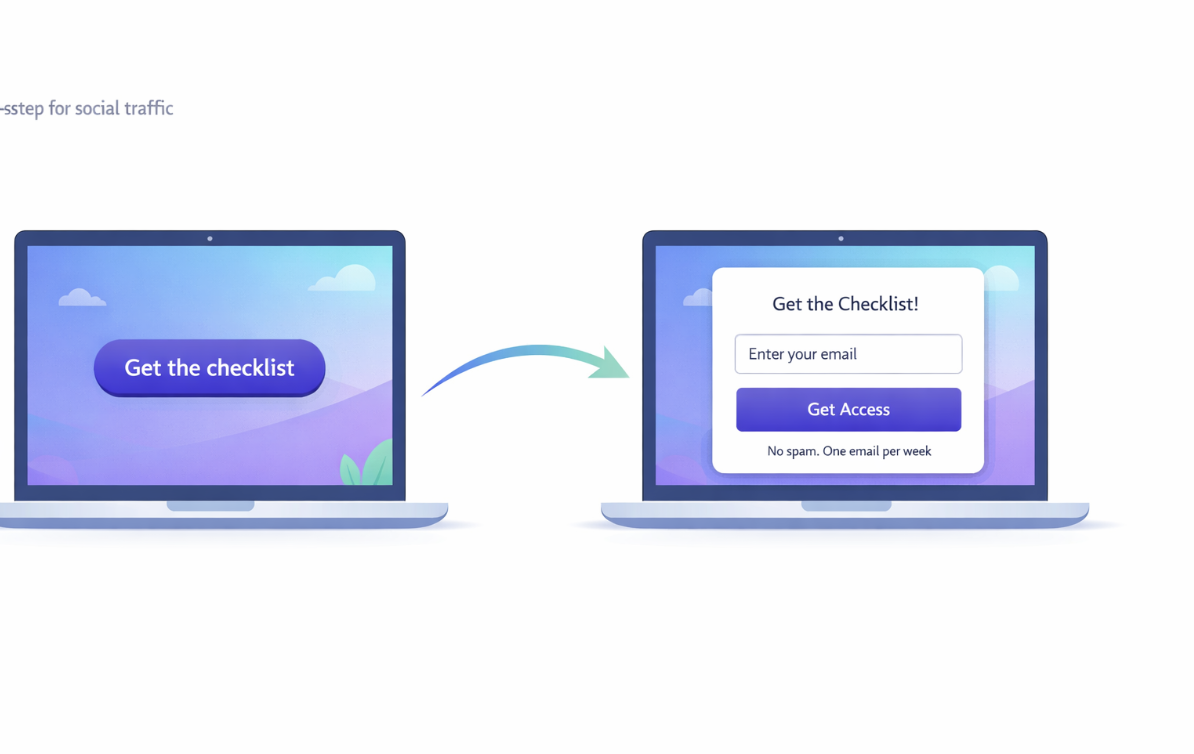
If you want to build this without coding, a no code widget tool like Claspo handles multistep flows, teasers, and form embeds easily.
4) Make the offer feel earned and valuable
"Sign up for updates" basically says "trust me for no reason".
Your offer needs to feel specific and useful. Here are a few formats that work well for social traffic:
- A swipe file with captions or hooks
- A short email course over 3 to 5 days
- A checklist that is one page and actionable
- A template pack for creators
- A small bonus like a free shipping guide
Two rules to remember.
- Name the outcome. Not the format.
- Keep the effort low. If it takes more than 30 seconds to understand, people will leave.
5) Trigger at the right time rather than the fastest time
Popups are not the problem. Bad timing is the problem.
Instead of showing an overlay the second someone loads the page, use signals:
- 30 to 60 seconds on page
- 50% scroll depth
- Viewed 2 or more sections
- Returning visitor
- Exit intent (but be careful on mobile)
This keeps things respectful while still converting specific users.
Also, try to segment by source. Social traffic is not all the same. A visitor from a tutorial post should see a different offer than someone from a product demo post.
Tools like Claspo make this simple by letting you target by UTM parameters or behavior, so visitors do not get annoyed on every pageview.
6) Remove friction like your revenue depends on it
Every extra second and every extra field costs you conversions. You have to fix the basics.
Mobile first layout
Most social traffic is on mobile. Your form needs to be thumb friendly, fast, and readable without zooming.
Short forms
Start with email only. You can add more fields later once trust is built.
Trust cues
Add one sentence that calms anxiety:
- "No spam. Unsubscribe anytime."
- "We send one email per week."
- "Used by 5,000+ creators" (only if it is true)
Fast load
If your landing page is slow, you are paying for clicks that never turn into visitors.
7) Measure the full path and not just the signup
If you only track "form submitted", you are missing the real story.
Set up a simple loop to measure success:
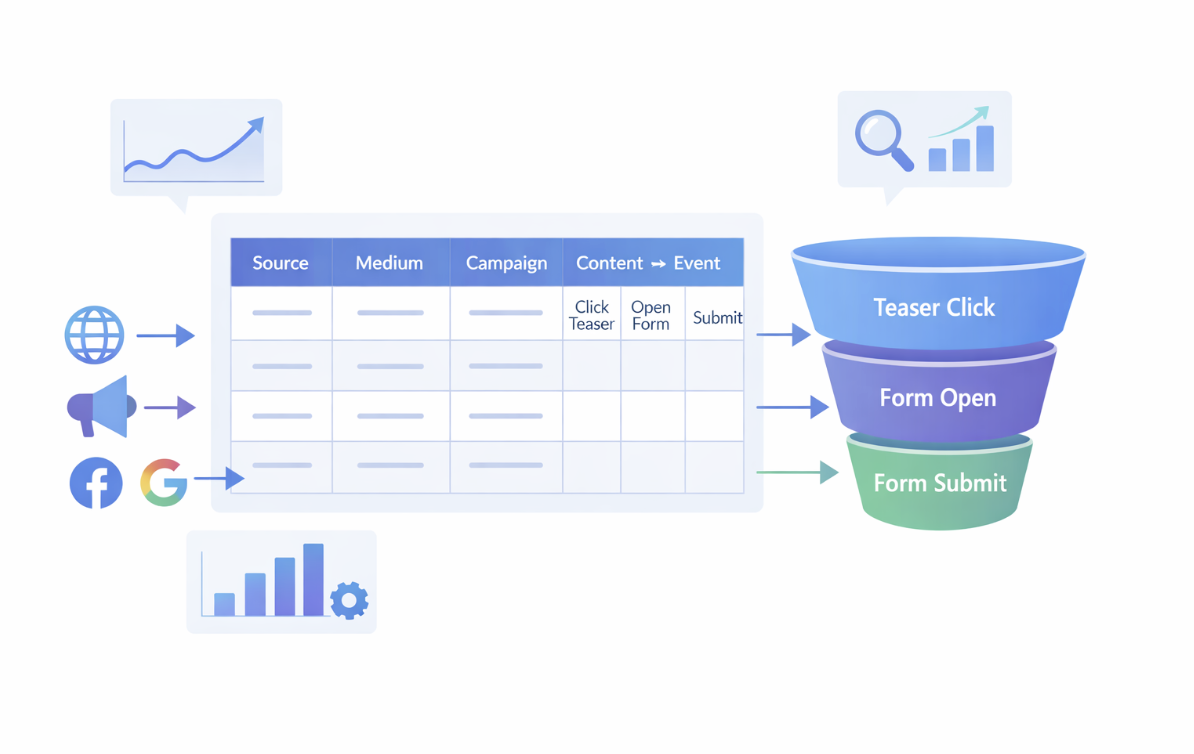
- Track every link from social with UTMs
- Track page view, micro commitment click, and submit
- Compare source plus creative, not just "social vs email"
Then run small tests. Change one thing at a time:
- Headline angle
- Offer name
- Two step vs one step
- Teaser vs full screen
- Timing trigger
The point: build assets you can keep
Social media is rented attention. Owned channels are compounding assets.
If you can consistently turn even a small percentage of your social viewers into subscribers, you build stability. You also get a place to nurture people who are not ready to buy today. And once that base is growing, building out referral marketing with Referral Rock can turn your existing subscribers into a steady source of new ones.
And the best part is that you do not need a huge team. You need a clear promise, a clean page, respectful timing, and steady iteration. A tool like Claspo can speed up the experiments, but the strategy is what makes them work.