Why Brands Are Turning to Snapchat's Live Story Feature

Spybroski Team
Why Brands Are Turning to Snapchat's Live Story Feature
If you've been sleeping on Snapchat as a marketing tool, it's time to wake up. Snapchat Live Stories have quietly become one of the most effective ways for brands to reach younger audiences in real time. And no, this isn't about dancing filters or puppy ears. The Live Story feature turns everyday users into content creators for your brand, and the results speak for themselves.
Let me explain what makes this different from everything else out there.
What Exactly Are Snapchat Live Stories?
Think of Live Stories as a crowd-sourced documentary that builds itself in real time. When Snapchat activates a Live Story for a specific event or location, anyone at that event can submit Snaps. The platform then curates those submissions into a single, flowing narrative that shows up in the Discover section for everyone to watch.
So instead of one camera angle from a brand's marketing team, you get hundreds of perspectives from real people. The result feels genuine. it feels alive. And that's the whole point.
Here's how the basic process works:
- Snapchat identifies a significant event or location
- Users at that location get the option to submit their Snaps
- The platform uses a mix of human editors and algorithms to curate the best content
- The compiled Live Story appears in the Discover feed for all users
The barrier to participate is almost zero. You take a Snap, select the Live Story option, and you're done. No special formatting. No worrying about how it looks on your personal profile. Just capture the moment and share it.
What makes this stand out from Instagram Stories or TikTok is the location-based, event-centric coordination. Neither platform has built anything quite like it. Snapchat's evolution from messaging app to content platform has been gradual, but Live Stories represent one of the most significant steps in that direction.
Why This Matters for Brands
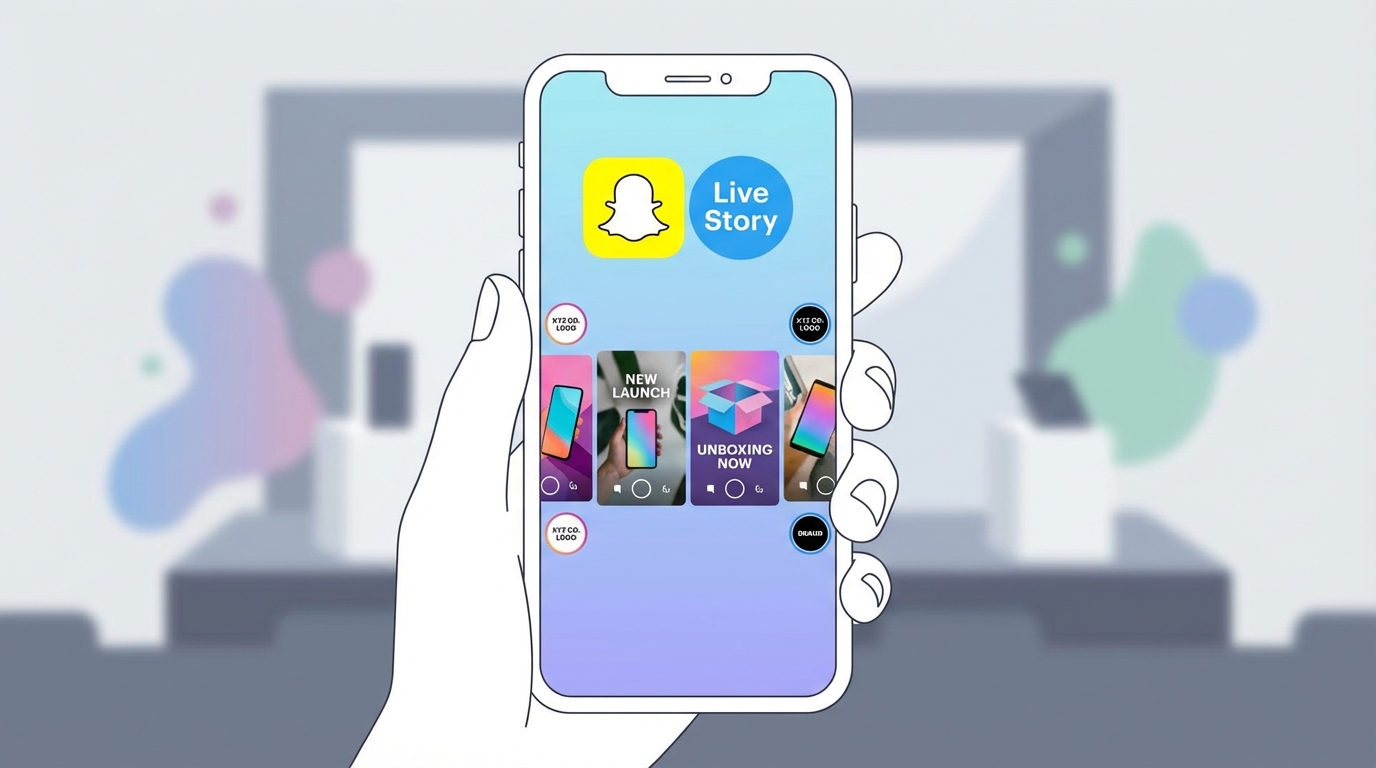
Here's the thing. Traditional advertising tells people what to think about a product. Live Stories let real customers show what they actually experience. That distinction is huge.
Snapchat reports over 900 million monthly active users. And the engagement numbers are hard to ignore. According to research by Amplified Intelligence, consumers pay five times more active attention to ads on Snapchat compared to in-feed video ads on other mobile platforms. The platform also generates 12% higher conversion rates compared to other paid media sources.
But those are general platform stats. Live Stories take it further because the audience is self-selected. People choose to watch a Live Story. Nobody forced it into their feed. That means higher completion rates, more shares, and better recall.
For Live Stories brands are discovering something valuable: they don't need to control the narrative to benefit from it. When your customers tell the story for you, it carries more weight than any ad campaign.
The Trust Factor
Close friends are four times more influential than celebrities when it comes to purchase decisions among Snapchat's core demographic. That stat alone should make you rethink how you approach content creation. When someone's friend shows up in a Live Story wearing your product or visiting your store, that's peer validation. You can't buy that kind of credibility. But you can create the conditions for it.
Real Brands, Real Results
Let's look at some actual examples instead of theory.
River Island used Snapchat's geofilters combined with Live Story activations during in-store events. Customers shared their shopping experiences with their networks, creating organic endorsements that no amount of paid advertising could replicate.
Bloomingdale's built a geofilter-based scavenger hunt inspired by Pokemon Go. Customers navigated different departments collecting filters, and the engagement was massive. Jonathan Paul, the retailer's operating VP of social media, called it one of their most successful social activations.
Lipton launched its Green Strawberry flavor in the Netherlands using Live Story activations and user-generated content. the campaign drove an 11-point increase in product awareness and a 3-point increase in action intent. Those aren't vanity metrics. Those are numbers that translate to actual sales.
Domino's Pizza activated Live Stories during promotional windows in the MENA region and saw positive returns on ad spend across multiple markets.
The pattern is consistent. Brands that give users a reason to participate and then get out of the way see strong results.
The Sports and Entertainment Angle
Sports might be where Live Stories shine brightest. Snapchat's own research shows that 90% of sports-interested users are active on the app during live events. They're watching the game on TV and scrolling Snapchat at the same time.
When Snapchat introduced its "Cricket in a Snap" offering for the Indian Premier League, they highlighted that 85% of Gen Z in India follows the IPL. That's a massive audience already primed to engage. Brands that activate Live Stories during matches aren't interrupting the experience. They're joining the conversation.
The same logic applies to concerts and festivals. Attendees at music events naturally want to share what they're seeing and feeling. Live Stories give them a platform to do that while simultaneously building a narrative that reaches millions of people who aren't there. That creates serious FOMO, which drives future ticket sales and brand engagement.
Snapchat's "The Snappy's Awards Show" took this concept and ran with it, positioning Live Stories as essential infrastructure for shared cultural moments that extend beyond the physical venue.
How to Actually Make Live Stories Work
Knowing that Live Stories work and knowing how to execute them well are two different things. here are some practical considerations.
Before the Event
Don't treat Live Story participation as an afterthought. Tell your audience it's happening. Use your website, email list, social channels, and physical signage to communicate that a Live Story is active and how to contribute. Brands that promote participation see dramatically higher submission volumes.
You also need to decide your curation approach ahead of time. Light-touch curation works best. Filter out content that violates community guidelines or brand safety standards, but resist the urge to remove anything that isn't perfectly polished. Over-curation kills authenticity, and your audience will notice.
During the Event
Have a moderation team ready. Real-time content means real-time decisions. establish clear protocols for what gets removed and who makes that call. But remember, authenticity includes imperfection. If someone posts a slightly shaky video of genuine excitement about your product, that's gold. Don't delete it because the lighting isn't perfect.
After the Event
Live Stories stick around for 24 hours. People who couldn't attend will watch later. Keep the story accessible for the full window to maximize reach with your secondary audience.
Coordinate with Other Channels
The best activations layer Live Stories with paid ads, influencer partnerships, and earned media. When multiple touchpoints reinforce each other, the combined effect is much stronger than any single channel alone. You could also build urgency by including exclusive promo codes or giveaways visible only through the Live Story.
What Makes Live Stories Different from Competitors
Instagram copied Stories from Snapchat back in 2016. we all know that. But Instagram Stories focus more on individual creators and personal feeds. TikTok's algorithm excels at distributing entertaining short-form video, but it lacks the real-time, location-based coordination that makes Live Stories unique.
Snapchat occupies a distinct position in this landscape. And here's a number that should catch your attention: Snapchat receives only 8% of brands' total ad spend despite contributing 10% of media-driven sales. That gap represents opportunity. Lower competition means lower costs per impression and a better shot at standing out.
For brands exploring social media marketing strategies, Snapchat's Live Story feature fills a gap that other platforms simply don't address.
Where This Is Headed
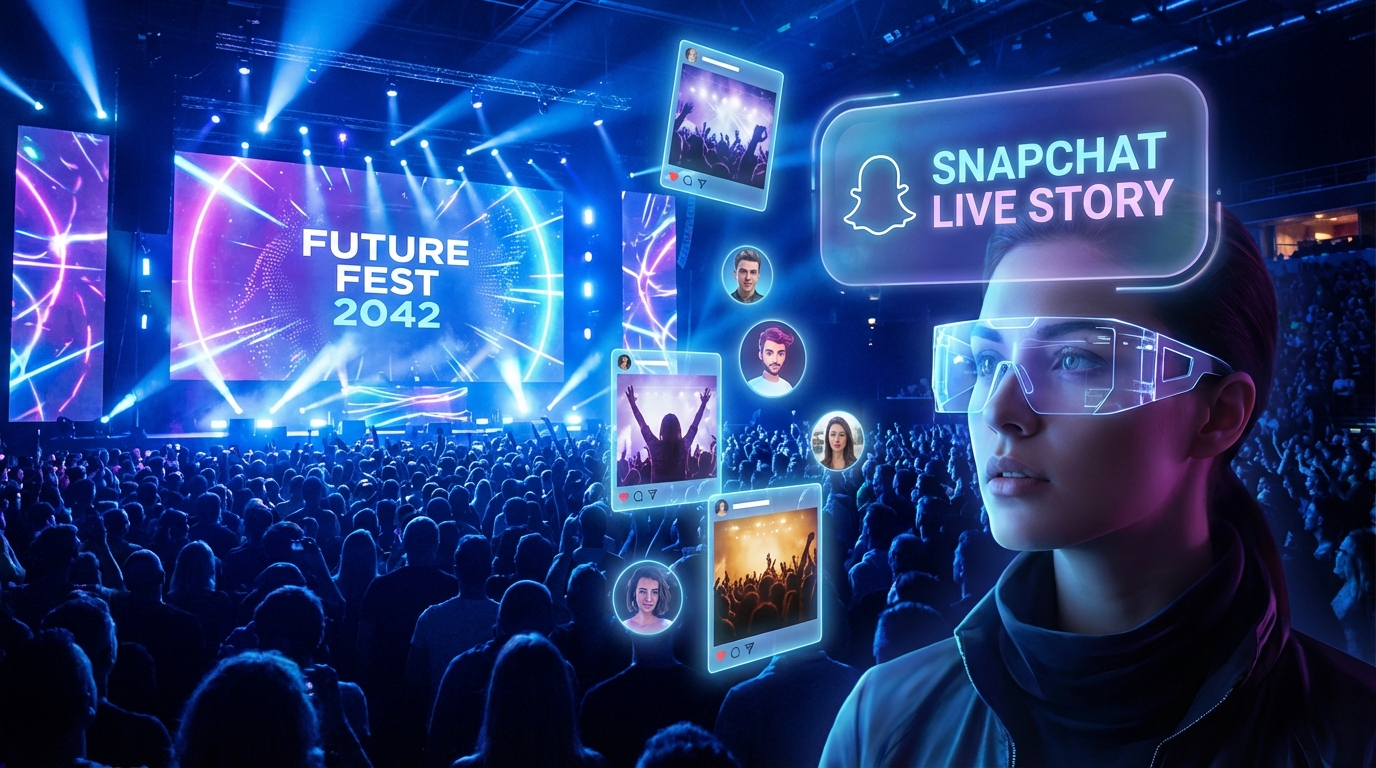
Snapchat is investing heavily in augmented reality and AI. Their Spectacles AR glasses hint at a future where Live Stories become immersive experiences rather than phone-based feeds. Picture attending a concert where you can see other fans' reactions overlaid on the physical stage through AR glasses. That's not science fiction. Snapchat is building toward it.
The platform is also experimenting with Topic Chats built around specific interests like Formula 1 racing. This suggests Live Stories could eventually expand beyond geographic locations to connect people across the world who share common interests.
And as measurement tools improve, brands will gain clearer attribution data linking Live Story exposure to actual purchases. That removes the guesswork and makes the investment case even stronger.
The Bottom Line
Snapchat's Live Story feature isn't a gimmick. It's a legitimate marketing tool that lets brands tap into authentic, real-time content created by the people who matter most: their customers. The engagement metrics are strong. The costs are competitive. And the audience, particularly Gen Z and younger millennials, trusts peer content far more than polished brand messaging.
Snapchat Live Stories work because they flip the script on traditional marketing. Instead of the brand talking at the audience, the audience talks to each other about the brand. That shift in dynamic changes everything.
If you're a brand looking to connect with younger consumers during moments that matter, this is worth your attention. Start small with a single event activation, measure what happens, and build from there. The brands that figure this out now will have a serious head start as the platform continues to grow.